CAPTAIN VIDEO!: R.O.A.R., "We Gotta Do It"
Do we, though?

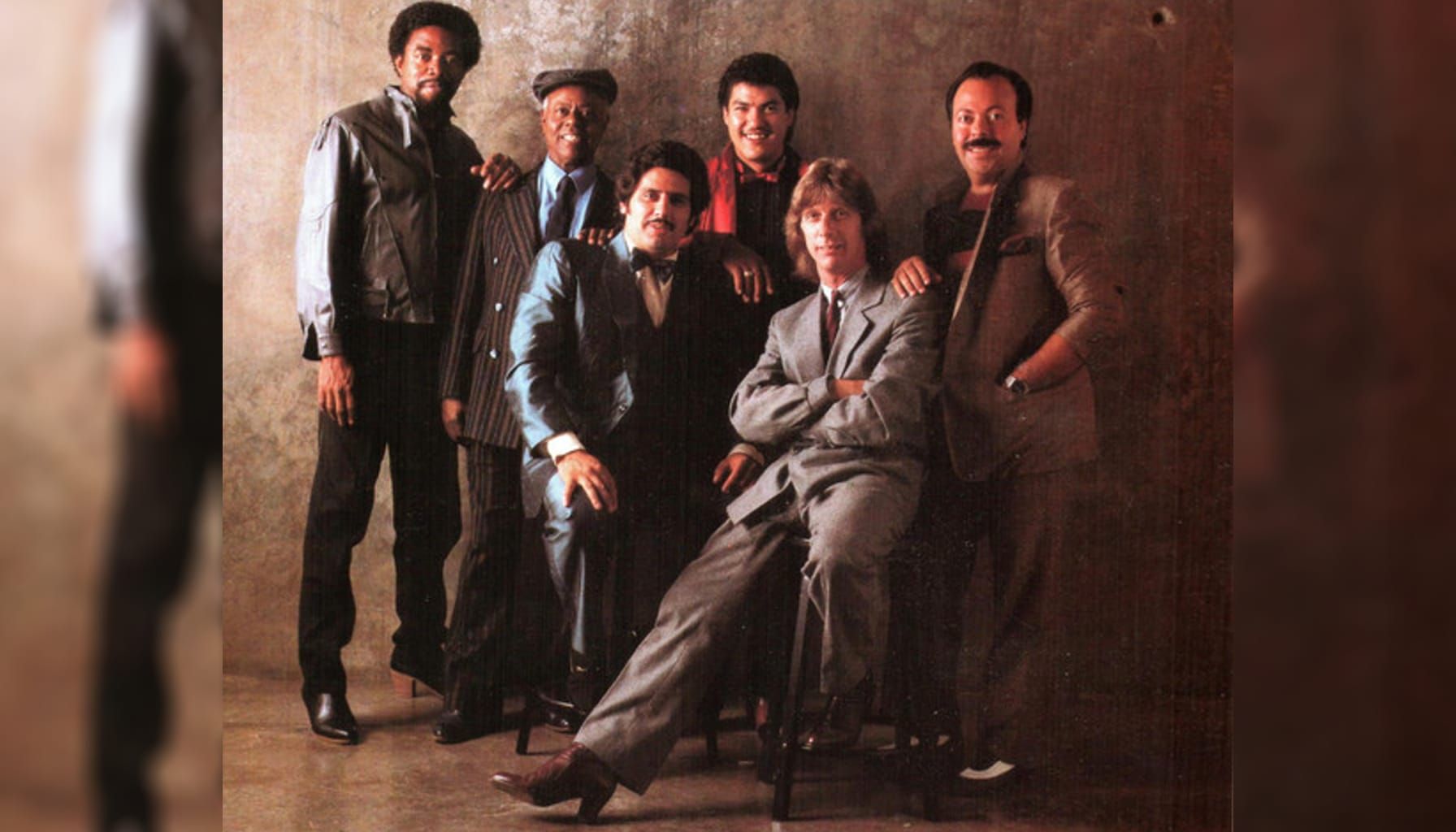
Greetings, Videots!
Today's dispatch from the 1980th Dimension takes us back to the middle of the 1980s — a time when, freed at last from the 1950s nostalgia forced upon a weary nation by endless episodes of Happy Days and Laverne & Shirley, Americans were finally free to indulge in nostalgia for the 1960s instead. As one might imagine, this proved commercially beneficial for a number of musical acts who'd released their biggest hits during that decade, some of whom even enjoyed an unexpected comeback in the bargain.
This was great for artists who'd been exiled from the charts long enough to be missed, but the timing wasn't so great for those who'd found a way to keep hanging around the Top 40, and never went away long enough for listeners to get nostalgic for them. Take, for example, Santana, a band that launched its career at Woodstock, forever linking itself to the Age of Aquarius before embarking on a recording career that continued to generate sizable radio hits into the early '80s.
The end of that previous sentence may surprise you. It certainly surprised CAPTAIN VIDEO!, who would have believed anybody who'd said that the hits of Santana's pre-"Smooth" era began and ended with "Oye Como Va" and "Black Magic Woman." But no, no, no — after enduring a fallow period in the mid-'70s, Santana made regular visits to the Top 40 between 1977 and 1982. This may have been in spite of Carlos Santana's tendency to shuffle lineups (including lead singers) from album to album, or it may have been because of it; one could just as easily make either argument. The point is, by hook or by crook, the Santana brand remained commercially relevant for an impressively long time.
Until, rather suddenly, it didn't. With 1985's Beyond Appearances, Santana broke a rather astonishing streak of 13 consecutive gold or platinum studio LPs; it was also the band's first album to peak outside the Top 30. Just looking at the group's discography, it's difficult to ascertain what exactly put them on the outs with Top 40 programmers, because in every visible way, Appearances was just as trend-sensitive and essentially anonymous-sounding as anything else they'd put out in the previous decade. The liner notes list a marvelously '80s 19 people who played on this thing, including Mitchell Froom, who's credited with "string synthesizer"; meanwhile, the record's sole single of note, the wanly dreadful "Say It Again," came courtesy of outside writers, another quintessentially '80s move.
But we aren't here to talk about Santana. Not really, anyway.
As previously mentioned, a long list of people passed through the band's ranks over the years, which eventually added up to a long list of people whose Santana tenure could conceivably be used as a selling point when it came time to pursue outside projects. Without having any way of knowing this for certain, CAPTAIN VIDEO! strongly suspects this proved truest for the small army of percussionists Santana employed at various points; after all, by 1985, few things were more passé than live percussion on a pop record. Unless you were Sheila E., you were being replaced by a drum machine.
This is one — perhaps the only? — plausible explanation behind R.O.A.R., the extremely short-lived Santana spinoff that released its sole album in 1985 before disbanding the same year. Led by on-and-off Santana singer Alex Ligertwood, the lineup also included percussionists Armando Peraza, Orestes Vilató, and Raul Rekow, as well as keyboard player Chester D. Thompson. (The lineup also included a fellow named Rafael Cornejo, who appears to have been credited solely with co-production and background vocals. Nice work if you can get it.)
Okay, so what we have here, on paper, is a trio of Santana percussion players on holiday from the band, accompanied by the guy who sang mid-period hits such as "You Know That I Love You," "Winning," and "Hold On." Based on the available evidence, it'd seem perfectly reasonable to assume that Peraza, Vilató, and Rekow were all sick and tired of being sidelined by machines, and decided to make an old-school record that was played instead of programmed. Despite never being any kind of Santana fan, CAPTAIN VIDEO! must admit that this sounds like a pretty fun idea; alas, that was not what the members of R.O.A.R. had in mind. Instead, they decided to use their increased artistic freedom to make an album that was just as blandly glossy as anything their employer was up to during this period — more so, in fact, given the absence of Santana's distinctive guitar.
Having said all that, it seems charitable to note that while R.O.A.R. isn't a very good album, it also isn't a very bad one, at least not in the context of its loose genre and era. More than anything, these songs sound like the type of music you might hear if you were watching a random 1985 television show — say, Miami Vice, perhaps — that featured a scene taking place in a nightclub. Like a lot of albums released during this period, it captures a preponderance of talent in dogged pursuit of lucrative mediocrity. There's something to be said for this level of sheer competence, but it's also upsetting; these were people who knew what they were doing, and they did it willingly, if not with some degree of enthusiasm.
On the other hand, who knows how well Carlos Santana pays his band members? We all have bills to pay. And anyway, the video for R.O.A.R.'s big single, "We Gotta Do It," checks off several of CAPTAIN VIDEO!'s favorite boxes:
- Non-threatening gang members fighting for reasons that are entirely unclear
- Band members seen playing instruments that are absolutely not heard on the recorded track
- Lyrics that continually urge the listener toward the completion of a goal that is never defined
Are you intrigued yet? No? Not at all? Well, buckle up anyway, friends, because we're diving into this thing. We gotta do it.
The video begins, as so many of its contemporaries did, with a shot of something hitting something else — in this case, a bat slapping into some dude's palm — in time with the perfunctorily icy rhythm of a drum machine. This is followed by brief glimpses of chains, biker gloves, and bandanas, which is how we know we're being given a privileged glimpse into the terrifying world of music video ne'er-do-wells:
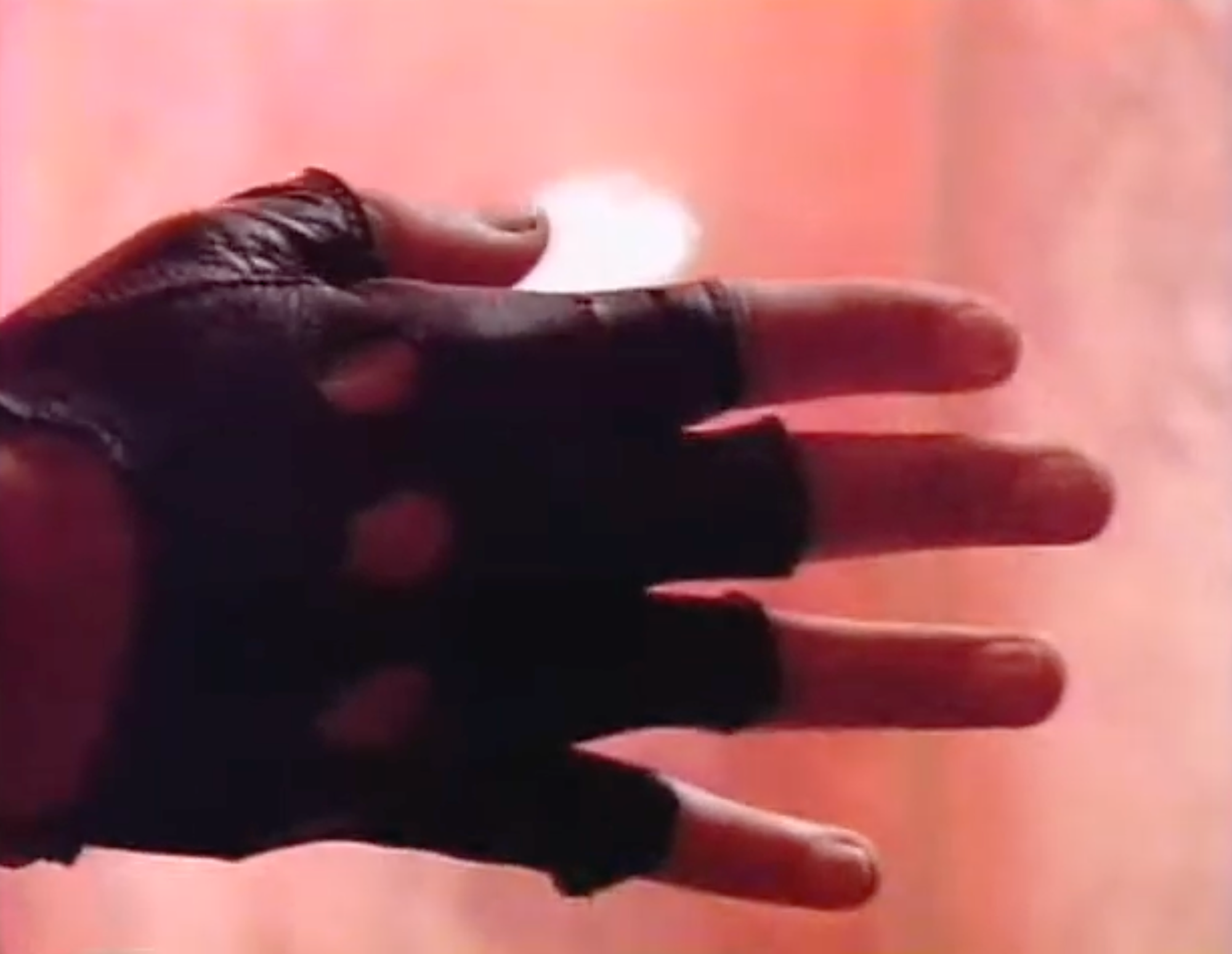
Why are these fellows all pissed off and leathered up? Friend, if you've watched even one music video from this time period, you know that is not only the wrong question, but a completely irrelevant one. To watch MTV during this period was to immerse oneself in a world where every street was perpetually bathed in fog and colorful neon lights, and also perpetually prowled by gangs of beautiful thugs who danced a lot. CAPTAIN VIDEO! can't be sure, but it seems like portions of this clip may have been filmed on the set left over after Kenny Loggins wrapped the shoot for "I'm Free (Heaven Help the Man)." If you lived through these years, you know exactly the vibe we're getting here.
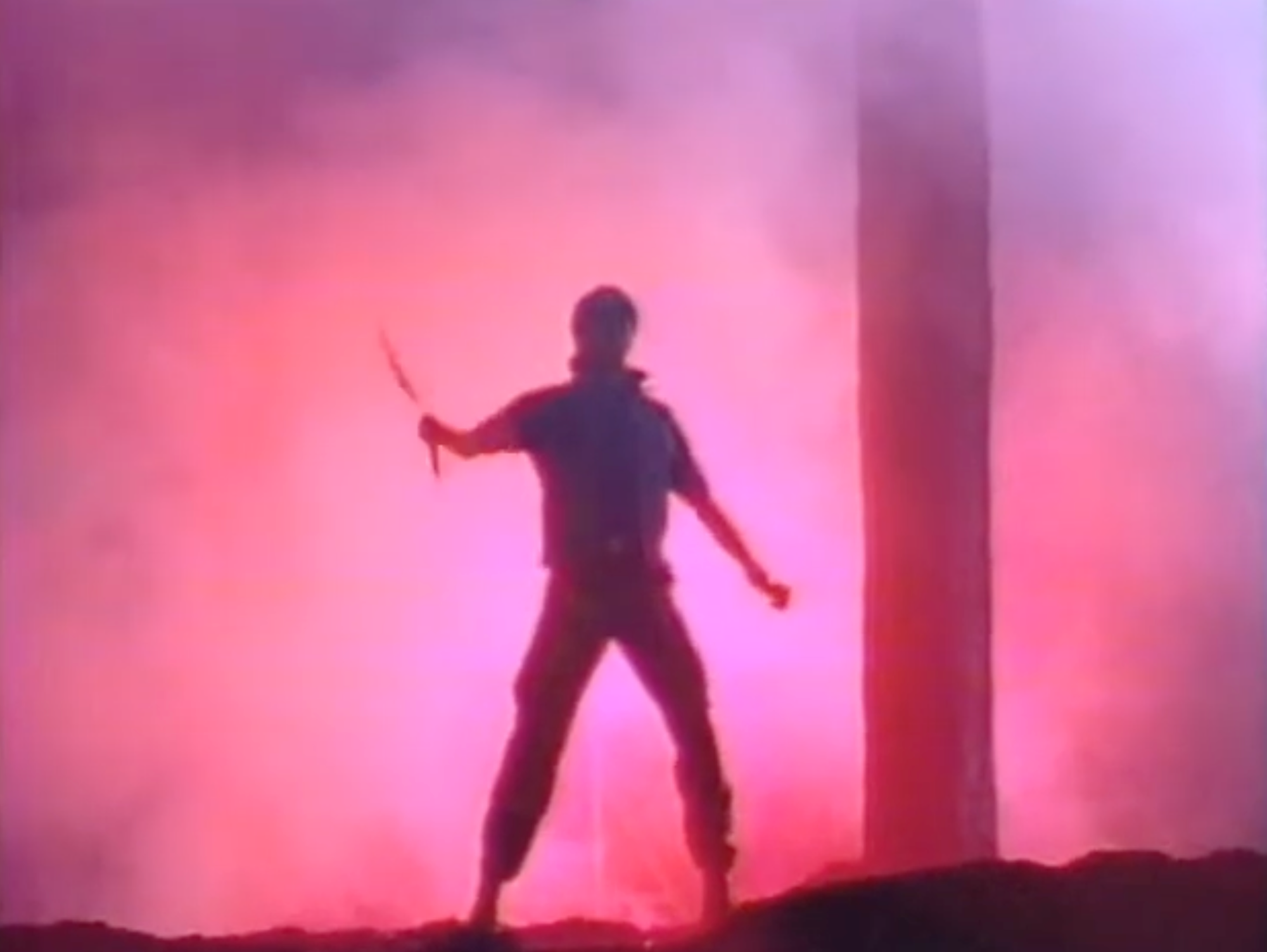
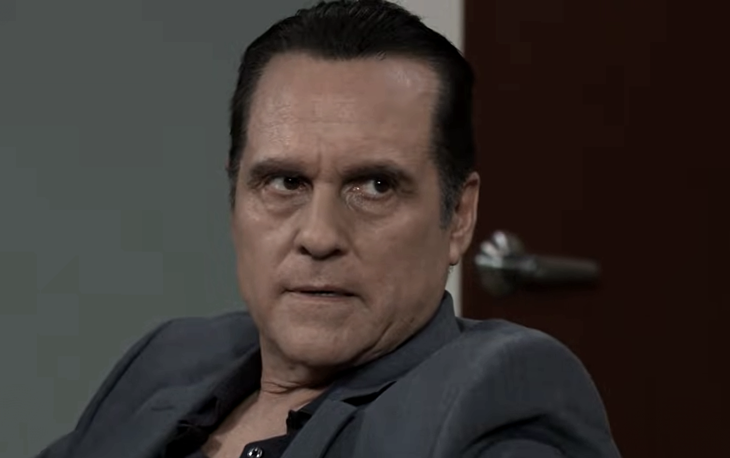
Again, please quell any hopes and/or dreams of figuring out what these folks are beefing about. That isn't what matters. Instead, our focus is on the way all this choreographed tomfoolery is affecting the bond between two brothers. They're both vaguely "ethnic" in that mid-'80s way that meant they were probably Italian, but they're also very different! You can tell because one of them is raring to hit the streets, and the other one is super unhappy about it. It takes a lot of emoting to get all this across without any dialogue; fortunately, the fightin' brother is played by one Maurice Benard, who would soon go on to many decades of steady employment as a soap actor.
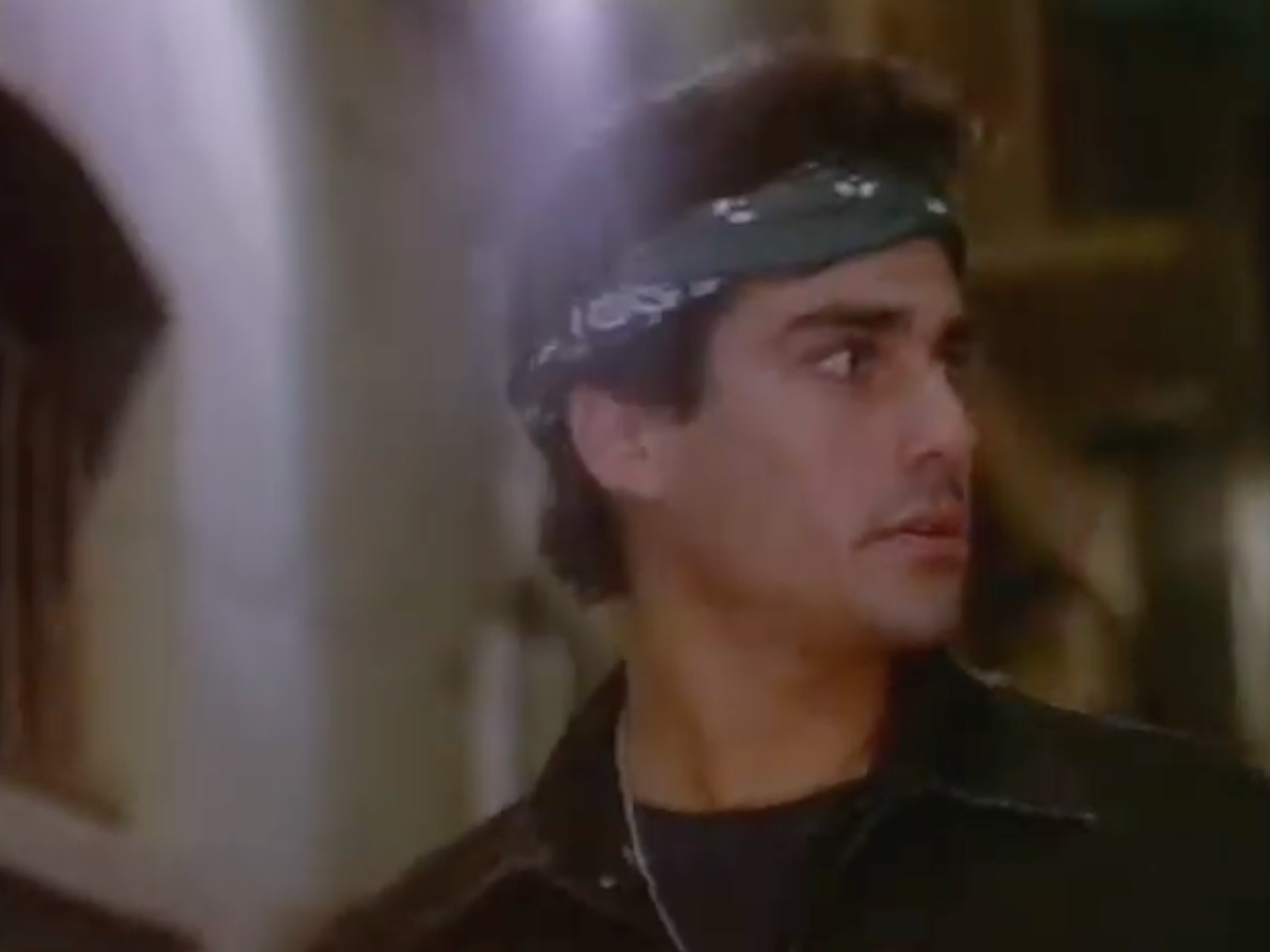
You can still see Mr. Benard plying his trade as crime boss/inexplicable protagonist Sonny Corinthos on General Hospital. Remarkably, his hair is pretty much the same color it was in 1985. Must be some incredible genes in that family:
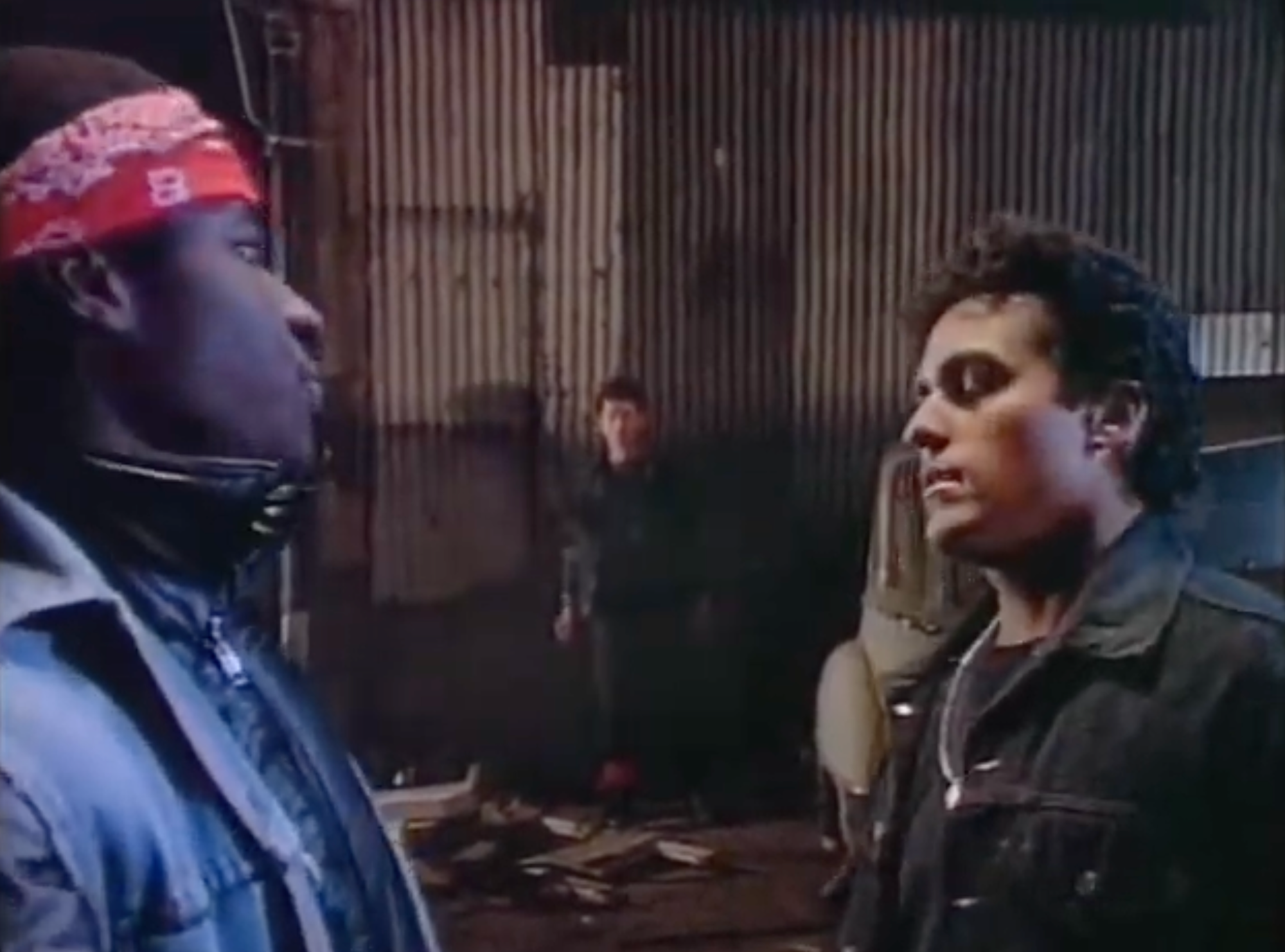
Anyway, over the purse-lipped objections of his less violent sibling, our guy heads out into the neon night to settle his score. His path quickly leads to other ruffians, and their confrontation is just about to lead to fisticuffs — or maybe an extremely intense dance-off — with a rival crew, when dammit, who should show up but his annoying little brother?
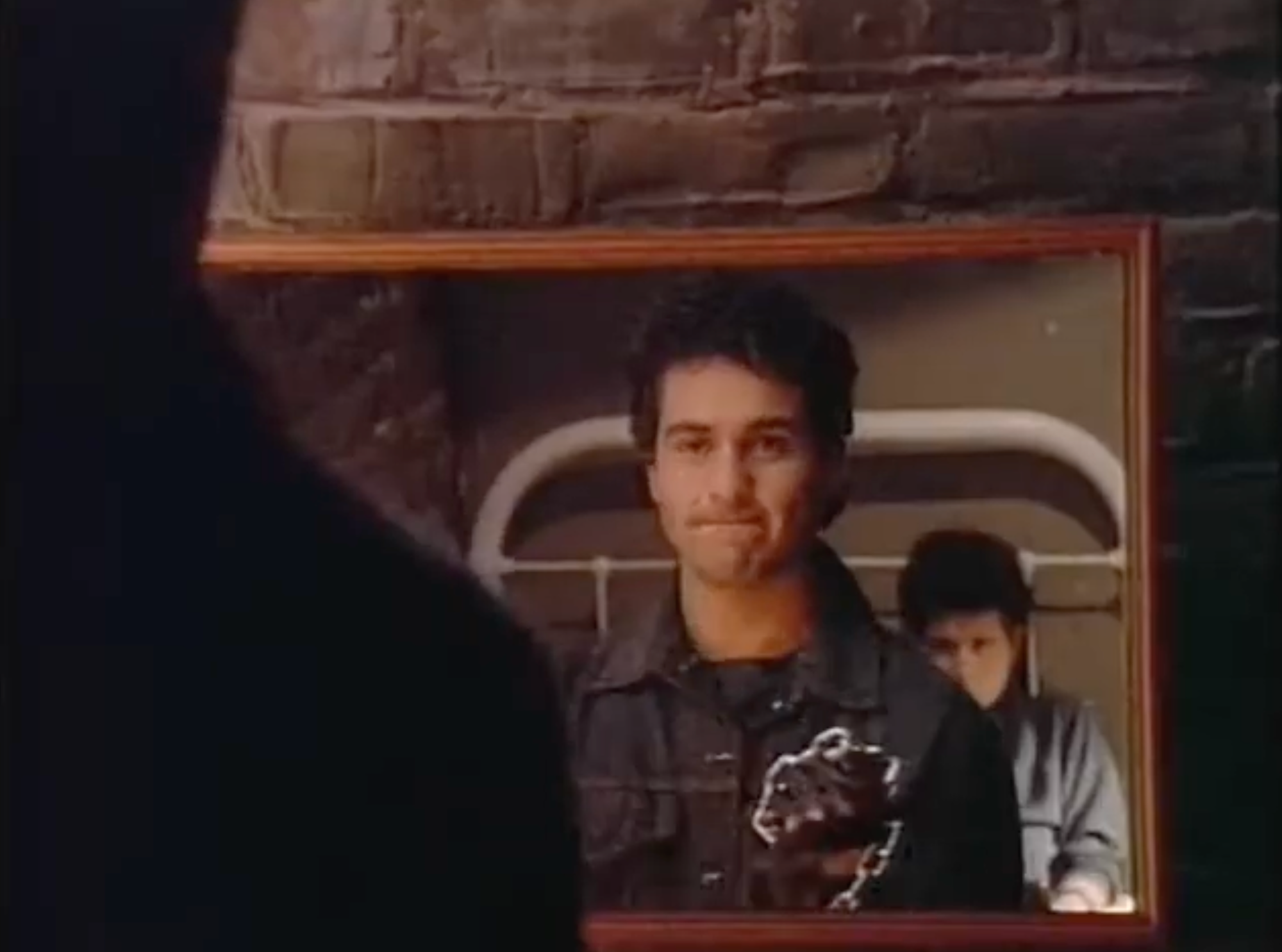
Here's where "We Gotta Do It" gives the plot a little bit of a twist — or at least something that feels like a little bit of a twist if you haven't cared enough to pay close attention. In the beginning of the video, it looked like the little brother was upset that his older sibling was going out to disobey city ordinances and whatnot:
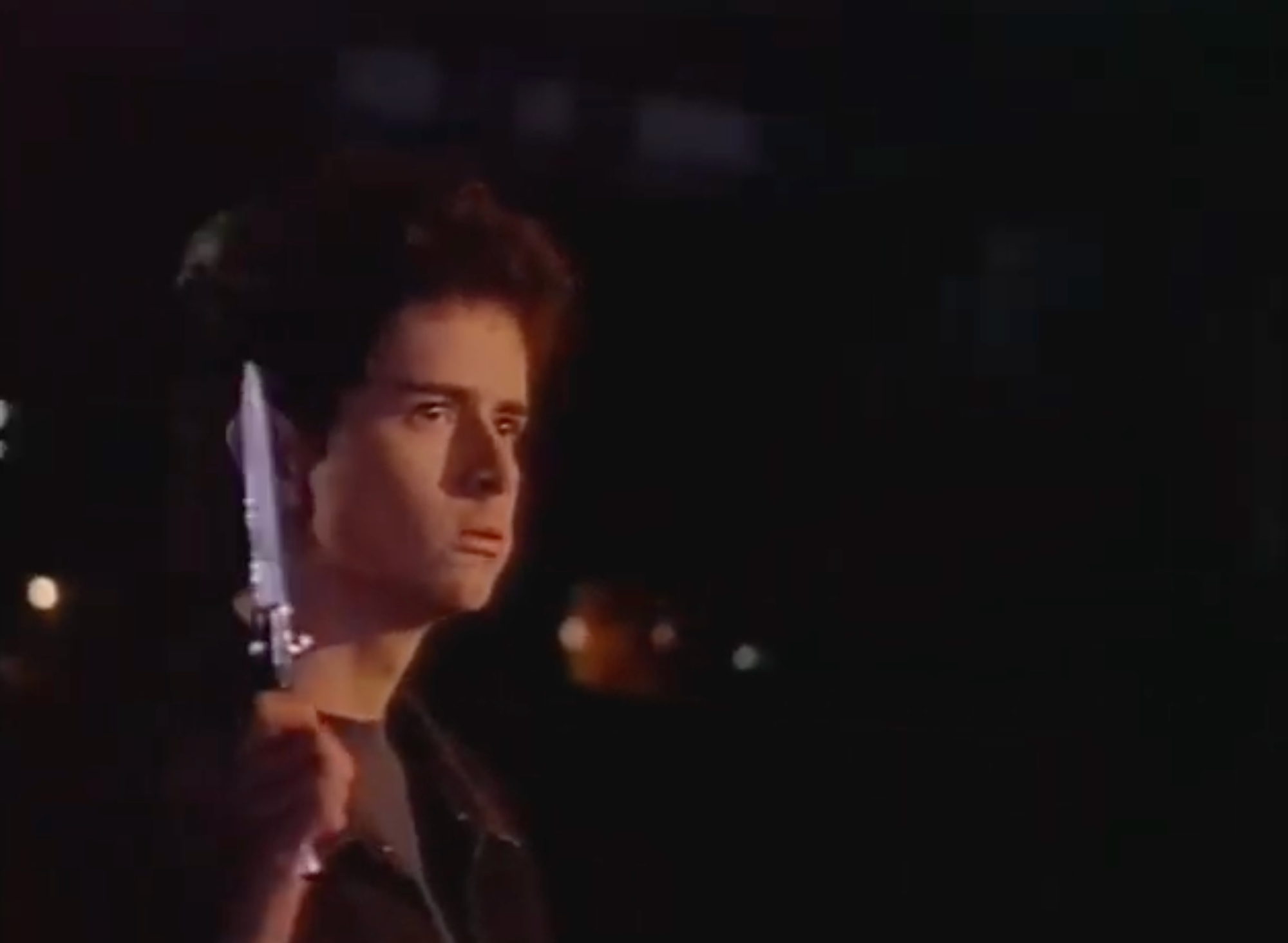
But it turns out that he was really upset because he wasn't invited. We know this because after thwarting his bro's big showdown, he pulls a knife, along with his absolute toughest facial expression. I'm not a KID anymore, man! Let's show them other guys who's boss! We gotta do it!
The members of R.O.A.R. are, unsurprisingly, not okay with any of this. To prove their commitment to the anti-violence cause, they've assembled on a nearby rooftop, where they are happily performing "We Gotta Do It" to an audience of pigeons and neighborhood residents who have to get up early for work in the morning.
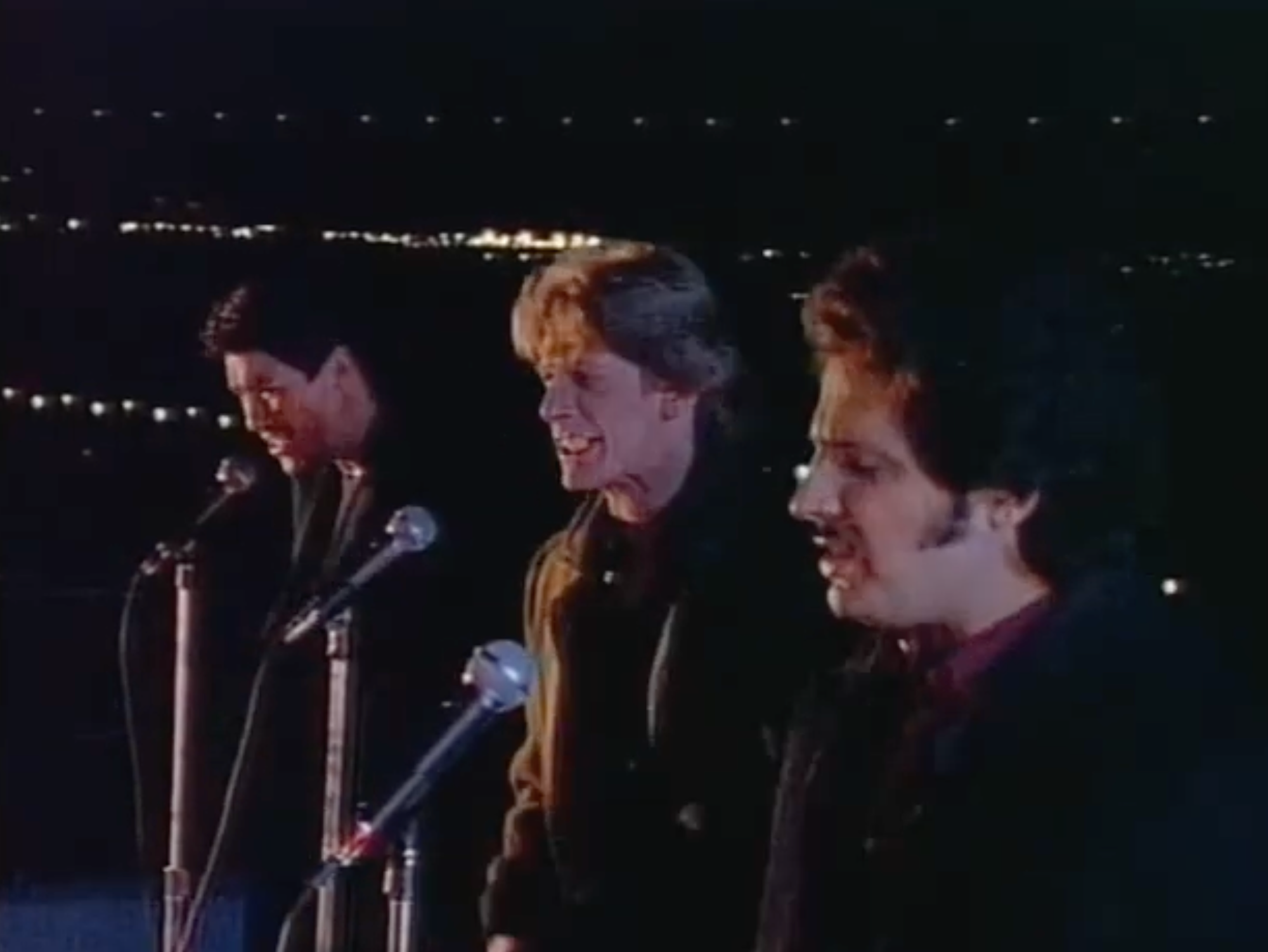
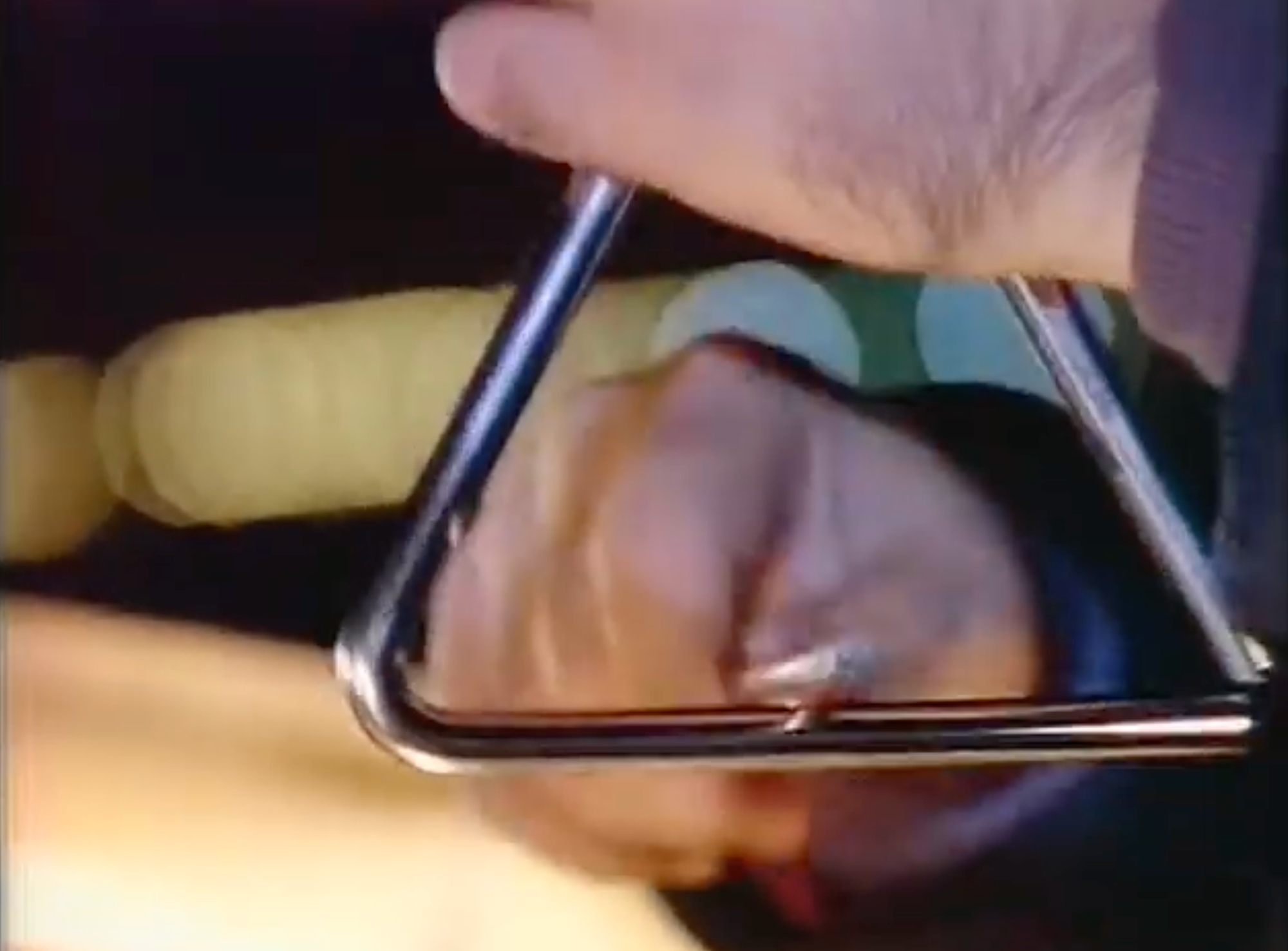
The "story" part of the "We Gotta Do It" video is plenty of fun on its own, but what really makes this clip for CAPTAIN VIDEO! is the "performance" part, which tries early and often to make you believe that there was any portion of the instrumental track that was not the product of a single mid-priced synthesizer and drum machine. Music education has been fund-starved for decades, but everyone who's ever seen this still knows what it sounds like when someone plays the triangle, and that sound is not in attendance here:
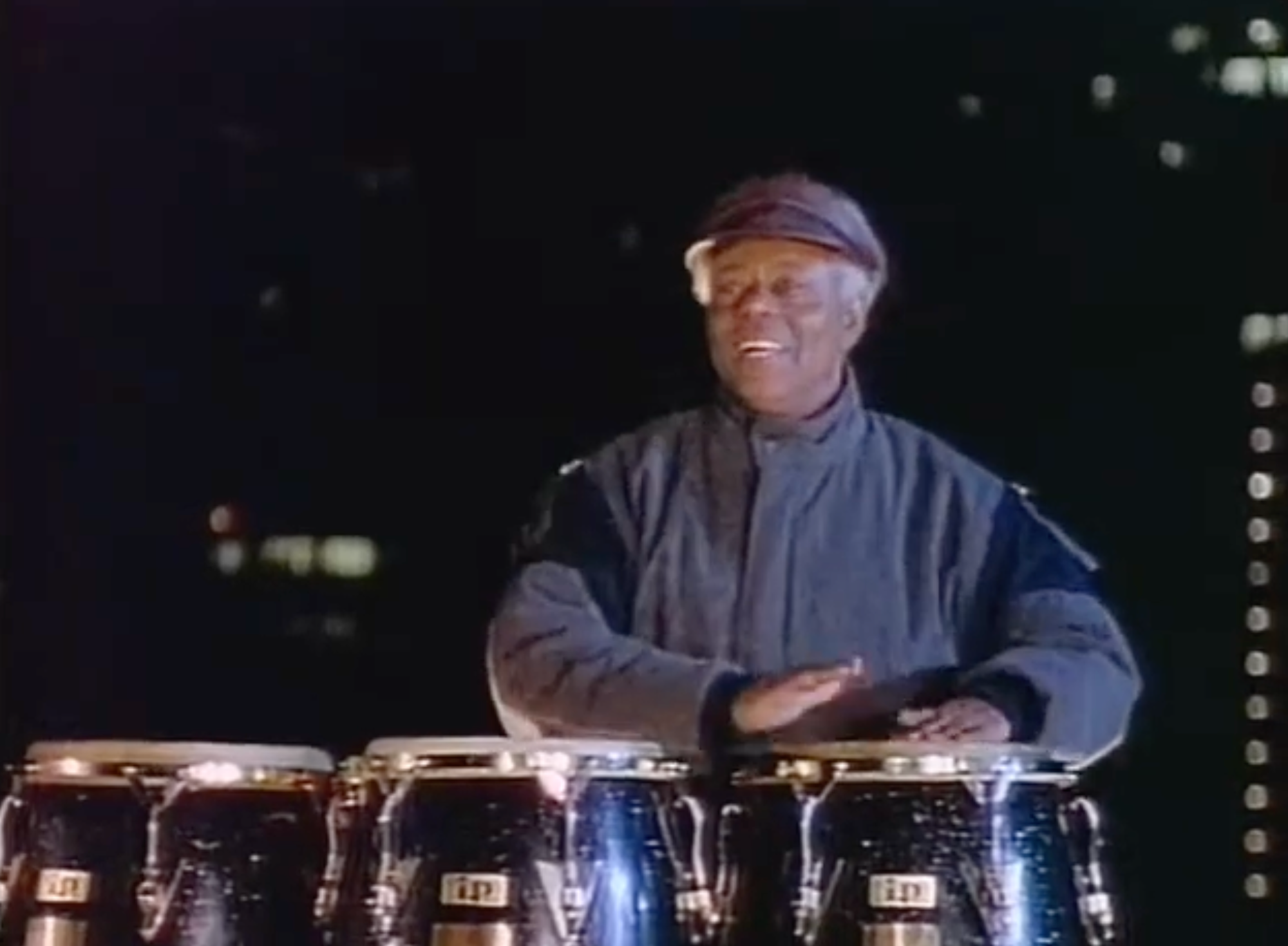
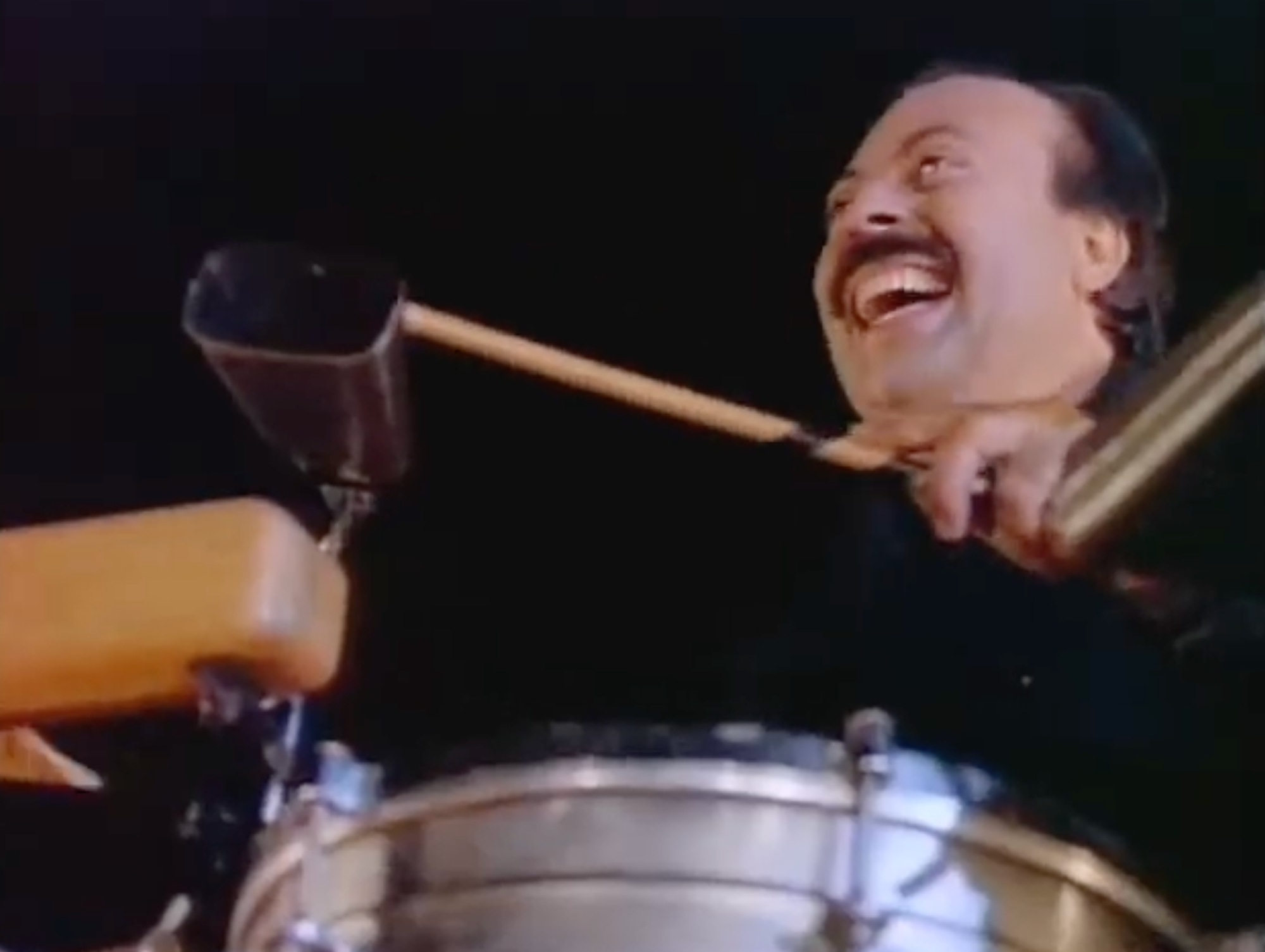
Also utterly delightful are the repeated cutaways to our percussionists, who are absolutely overcome with joy to have no audible part in the proceedings:
Music is a universal language, even when the music itself is sort of lame, so it comes as no surprise to us when R.O.A.R.'s rooftop concert is able to penetrate the din and quickly quells the budding brawl below. As soon as Little Brother pulls out his knife, Big Brother realizes he's made a series of terrible life decisions, and lets his wayward sibling know that the "it" they've gotta do has changed.
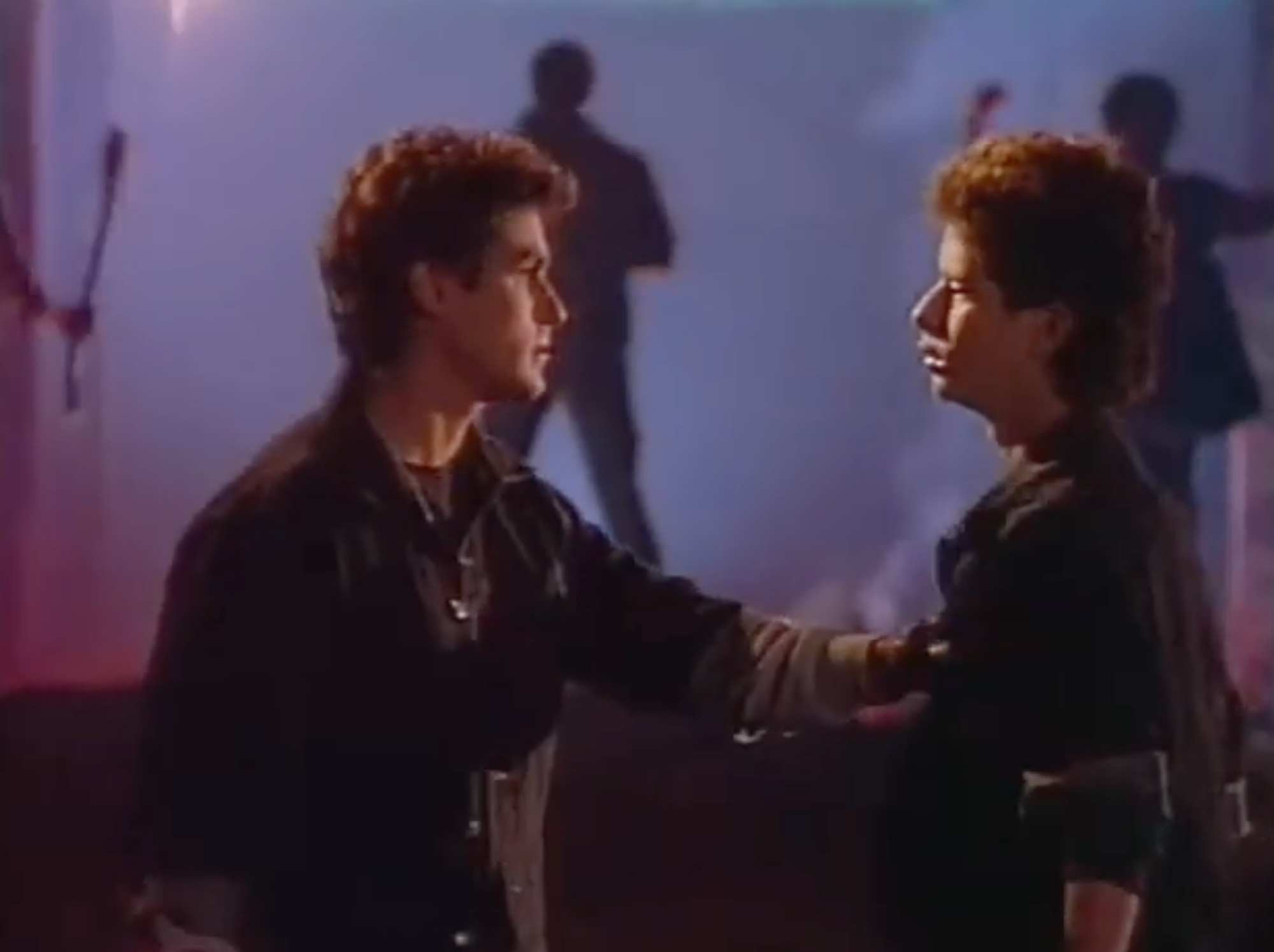
And just like that, the streets are safe again. Success! Great job, R.O.A.R.!
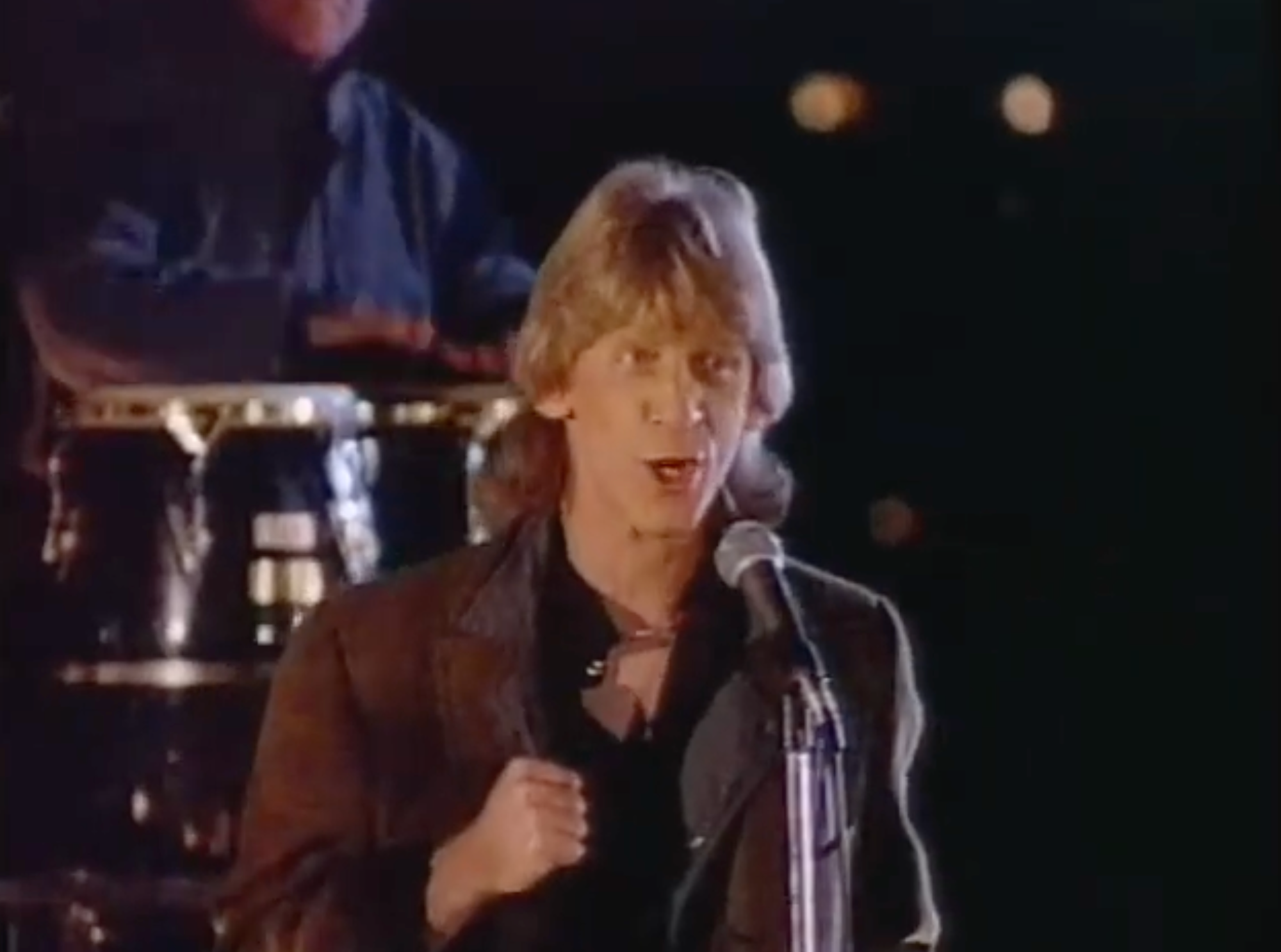
With their mission accomplished, R.O.A.R. disbanded. Ligertwood quickly joined up with the Grateful Dead spinoff band Go Ahead, which trucked along for a couple of years before dissolving; at that point, he rejoined Peraza, Vilató, and Rekow in the Santana lineup, where he remained until the mid-'90s. Ultimately, R.O.A.R.'s existence turned out to be a footnote in the Santana-affiliated discography, but that isn't necessarily anything to sniff at. These guys saw a million faces and smoothly rocked many of them for a very long time — if they happened to flail while reaching for a brass ring of their own, well, that doesn't really take away from the other things they accomplished. CAPTAIN VIDEO! never intends to listen to any of this ever again, but in the often painful context of the clips we've encountered during our long voyage, "We Gotta Do It" lands lightly and awkwardly on the goofily inessential end of the spectrum.