Blindspotting: Barbra Streisand, "The Barbra Streisand Album"
Fixing musical blind spots, one album at a time

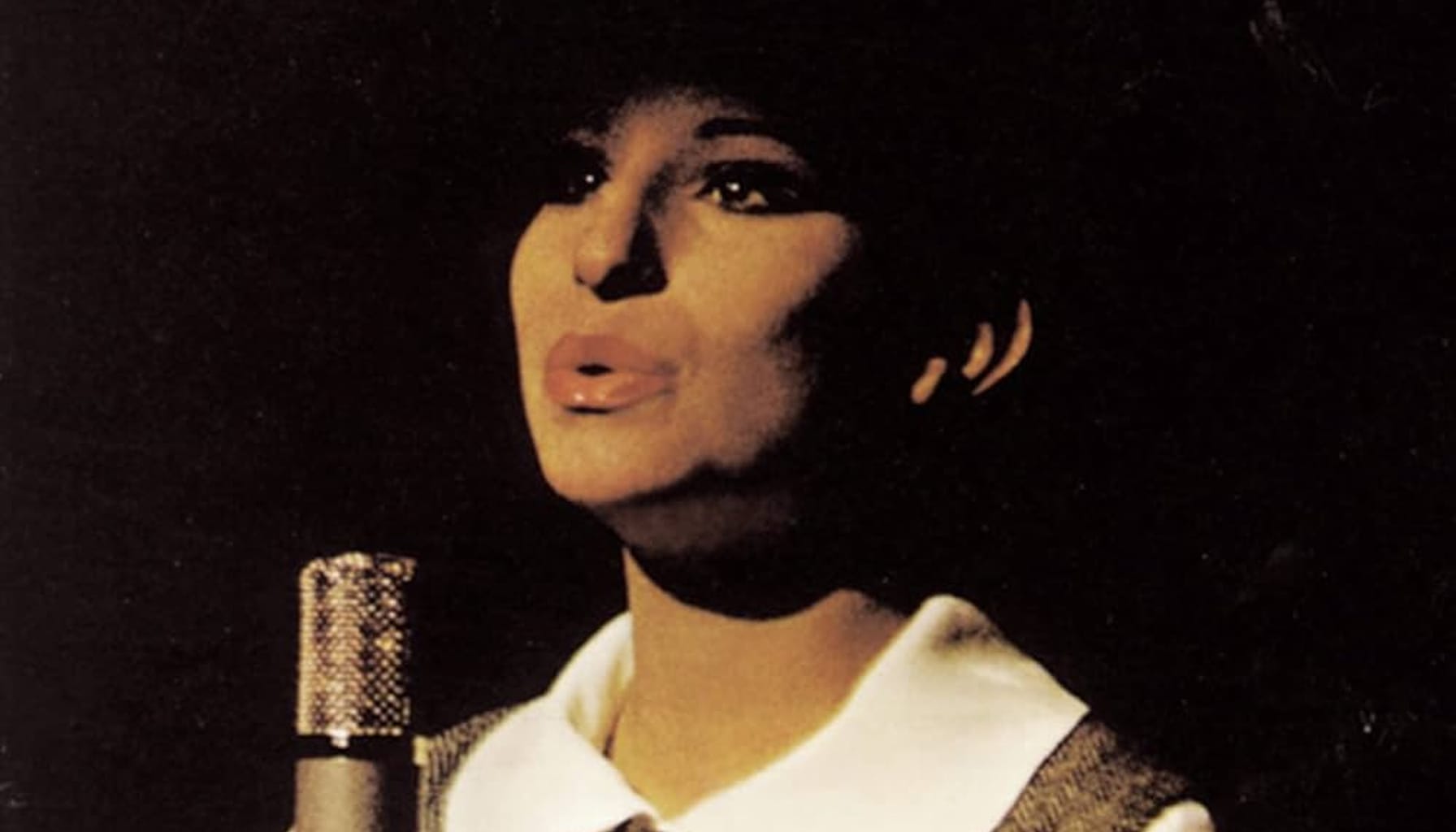
The Legacy: If you accept the origin story she gave the press after releasing her debut album in 1963, Barbra Streisand didn't even want to be a professional singer. She saw herself as an actor first, and it was only when she failed to book roles that she decided to take a swing at singing. As she told it, she noticed that a New York club called the Lion was hosting a talent contest, she entered, "learned two songs," won the damn thing, and off she went.
She really did go off, too: By the time The Barbra Streisand Album arrived in stores, she'd spent three years cultivating her Broadway career, and she wasn't even 21 yet. Although Columbia Records chief Goddard Lieberson famously resisted signing her, finding her style too out of step with his personal tastes, he was presumably happy to be wrong when Album proved an instant success, peaking inside the Top 10, spawning a speedy follow-up (The Second Barbra Streisand Album, natch), and winning a slew of Grammys the following year.
More than 60 years after its release, The Barbra Streisand Album can't help but sound quaint and a little stodgy, but at the time, Streisand was seen as daring and/or somewhat transgressive in terms of her choice of material. (And it really was her choice; her first Columbia contract traded less money for complete creative control.) Rather than playing it safe with songs the folks at home would know by heart, she drew on an array of Broadway deep cuts, like "I'll Tell the Man in the Street" or "A Sleepin' Bee." But she also wasn't afraid to tackle another singer's signature number, as she did with "Cry Me a River," which belonged to Julie London — at least until Streisand's version, which opens Album, blew London's take on the tune to smithereens.
Covering everything from Cole Porter to "Happy Days Are Here Again," the soon-to-be-Beatles-blessed "A Taste of Honey," and the Disney soundtrack number "Who's Afraid of the Big Bad Wolf?," The Barbra Streisand Album signaled a shift in what was acceptable for pop vocal records, particularly ones from female artists. Her legend, as we all know, only grew from there.
First Impressions: I offered permission to call bullshit on that origin story not because I'm any kind of Streisand scholar — far, far, far from it — but because when listening to The Barbra Streisand Album, one finds it exceedingly difficult to believe she had the sort offhand relationship with her own talent that she tended to project. Asked about her artistic ambitions in a 1963 interview with the Independent, she quipped, "I hate to sing," adding, "I sing to make a living... I sing what is commercial and what will sell." If that was ever really true, then she was absolutely born to act, because the performances collected here are beyond technically superlative; this is the work of a singer getting inside the songs, and leaving her imprint on every line because she has no other choice.
There is also, I would argue, no shortage of audible joy in the way Streisand attacks these songs. After obliterating Julie London's claim to "Cry Me a River" with her virtuosic interpretation of the song, she shifts gears for the lilting "My Honey's Lovin' Arms," shifts again for the balladry of "I'll Tell the Man in the Street," goes pop with "A Taste of Honey," channels Spike Jones with "Big Bad Wolf," and circles back to Broadway with "Soon It's Gonna Rain." If you're letting these performances play in the background, then they're all basically of a piece, but if you listen more carefully, you hear a young talent eager to show off everything she can do with what was really a pretty peerless instrument.
I write all these kind words as a listener for whom utter ignorance of Streisand's records has been a deliberate and lifelong choice. By the time I started consciously consuming music, she was still scoring pop hits, but they struck me as helplessly mannered and square — an impression reinforced by 1985's The Broadway Album, and deepened by every film and recording she released after that point. (As an act of kindness as well as stubborn self-preservation, I will not acknowledge her duet with Don Johnson here.)
The point I'm trying to make here is that I listened to The Barbra Streisand Album purely as an exercise, and with very low expectations. The last thing I thought I'd hear was exactly what I ended up hearing: A talented singer, yes, but one whose future fondness for soft-focus frippery had yet to overtake her own raw power. (I note, and decline to edit out, the semi-accidental Iggy Pop reference.) I wouldn't say I came away a fan, exactly, but for the first time in my life, I have some semblance of understanding where the Cult of Babs is concerned.
Favorite Song: I'm tempted to pick her take on "Who's Afraid of the Big Bad Wolf?," just because it's so cheerfully nutty (I would say "kooky," but Streisand had an antagonistic relationship with that word), but as an overall showcase for her voice and also something of a deep cut on the record, I'll go with "Much More" instead. I mean, "Cry Me a River" really can't be beat, but Streisand also has to do a bunch of stuff on "Much More," and she does it well — right on through to the lung-emptying final note.