Blindspotting: Scott Walker, "Scott 3"
Fixing musical blind spots, one album at a time

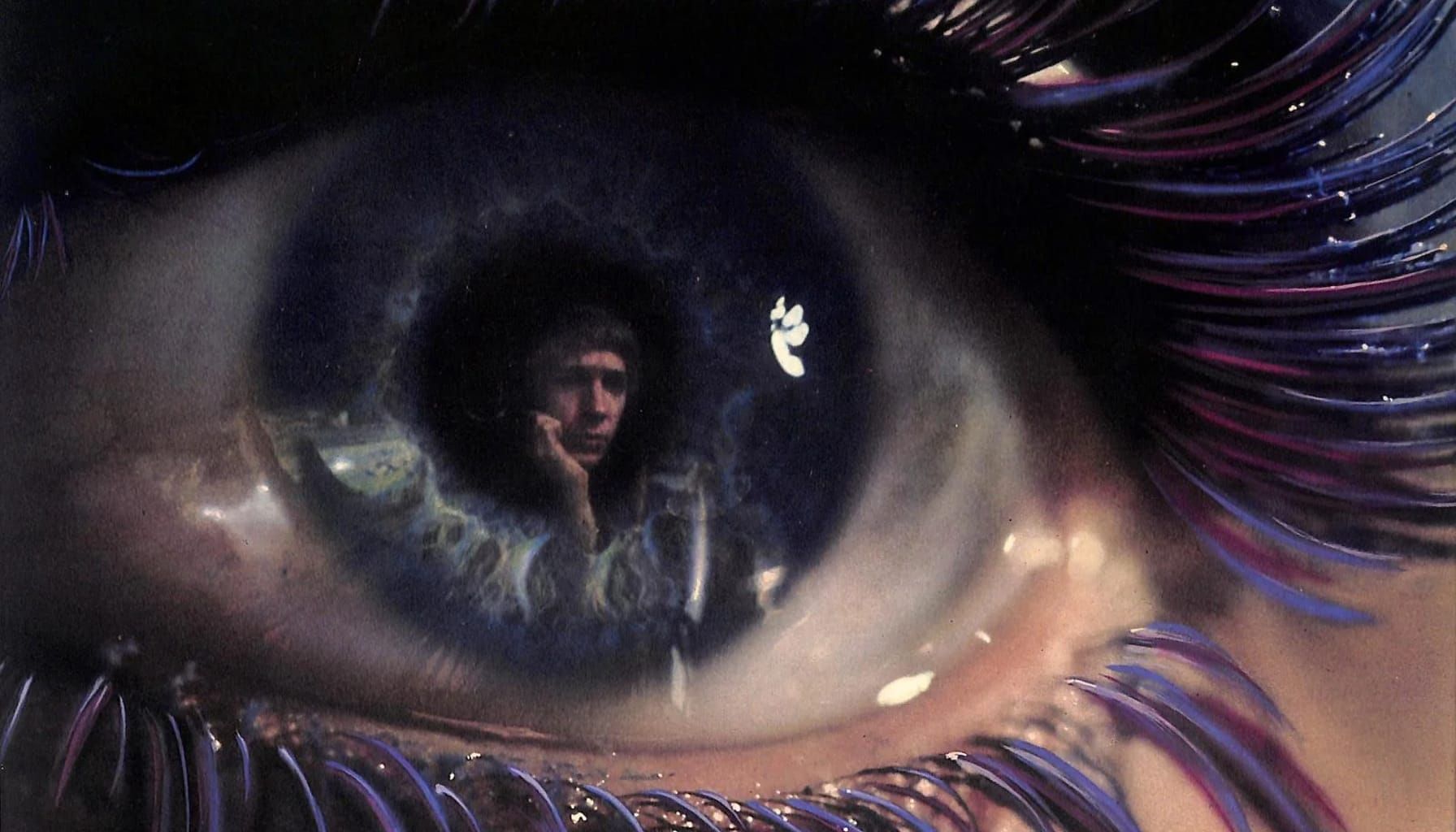
The Legacy: Well, this one's complicated. Before Scott 3 was recommended for this column by Friend of Jefitoblog VJBigSuit, all I really knew about Scott Walker was that he was a cult favorite among annoyingly and/or intimidatingly hip people; from a distance, he seemed like a sort of French New Wave movie come to life, a guy whose discography sounded like ennui and cigarette drags. I also knew he'd launched his solo career after leaving the Walker Brothers, but I assumed their sound was cut from more or less the same cloth. If you have any familiarity with any of the records I'm talking about here, you know I was hilariously off base with a lot of these assumptions.
If you're coming in cold, it's close enough to the truth to say that by the late '60s, Scott Walker was an increasingly reluctant teen idol whose complicated relationship with his own fame was starting to creep into his music. Those feelings would eventually lead to some seriously self-destructive behavior, as well as a series of fairly difficult avant garde albums, but with Scott 3, what you hear is a certain amount of difference-splitting. This largely self-penned set of songs finds him drifting away from the happening vibes of the Walker Brothers' poppier sides and toward a more contemplative, nakedly emotional sound — all while beginning to embrace lyrical subject matter that was, shall we say, less radio-friendly.
In the short term, Scott 3 continued Walker's streak of commercial successes, although the album's failure to generate any hit singles may have signaled the reversal of fortune that lay around the corner. Walker released three albums and hosted his own BBC TV show in 1969, but the last of those releases failed to chart at all, setting a trend that continued for his next five LPs and contributed to a lengthy period of creative malaise. After putting out a series of aimless adult contemporary albums and temporarily reuniting with the Walker Brothers, he eventually reached a place where he was free to do whatever the hell he wanted — a journey often traced back to his third solo outing.
First Impressions: Like I said, this one's complicated. To investigate Scott Walker's career is to tumble down infinite rabbit holes. His real name wasn't Scott Walker? He was born in Ohio? His sole album of the '80s features guest work from Mark Knopfler and Billy Ocean? The Walker Brothers covered Boz Scaggs? So on and so forth. This is one fascinating fellow, in other words, and no matter how expansively I try to write about Scott 3, I'm bound to leave out a lot of his story. Which is fine — we're only here to talk about Scott 3, after all — but the time I spend researching these Blindspotting columns is rarely spent so solidly in slack-jawed surprise, and I wanted to make that much clear.
As a listening experience, Scott 3 is basically one of those older records that's typically described in terms that don't seem to match what you're hearing. The narrative is that Walker's audience started cooling on him because his music became more challenging, but in 2026, this comes across as pretty standard stuff — if you wanted to describe it in loose terms, you wouldn't be out of line if you just called it a crooner's record with plenty of ballads, heavy on the strings. There really isn't anything all that challenging about the arrangements, and vocally, Walker sounds more than a little like Andy Williams; if you've listened to your share of late '60s pop records, you can probably imagine the sound without hearing it, and you're probably pretty close.
Where Scott 3 does differ from Walker's previous releases — at least the handful I've had time to hear — is the amount of, for lack of a better word, gravitas that's brought to bear on the material. Throughout the album, he sounds like a guy who's seen some shit, and it isn't just in his vocal delivery. Consider the opening track, "It's Raining Today": In different hands, it might have been just another lovelorn ballad, albeit an exceptionally well-written one, but here, a variety of subtle touches elevate the proceedings, starting with the droning, shimmering strings (courtesy of the great Angela Morley, a.k.a. Wally Stott). They tug at the edges of the song's gentle, invitingly lovely melody, dipping it in darkness — and then, around the 1:45 mark, breaking the lull with a bracing splash of dissonance.
And then there are Walker's lyrics. Throughout Scott 3, he ventures into thematic territory that's rarely trod in this context, but even when he's singing about matters of the heart, he does it with a poet's touch. I mean, holy cow:
It's raining today
But once there was summer and you
And dark little rooms
And sleep in late afternoons
Those moments descend
On my window pane
This whole record is stuffed with lines like this. The brief but haunting "Butterfly" opens with Walker singing:
There's a butterfly circling the beach
Searching the rocks where you are
He chooses your hair, and that's where he belongs
Another example, from "Two Weeks You've Been Gone":
I could read all my sadness in faces I knew
Down at Kelly's bar last Friday
And I haven't been back since I mistook
Somebody for a friend
It would absolutely be a stretch to say that Scott 3 is an album for everybody. As pretty as it is, and as memorable as some of the melodies are, it's still possible to understand how listeners weaned on Walker's teen idol stuff might have had an allergic reaction to these songs. In the end, it might have actually worked out for the best, because it was only after enduring the precipitous sales decline that followed Scott 3 that he was able to get to a place where he could create the five albums that closed out his recording career — an absolutely uncompromising outburst that makes Scott 3's supposedly challenging strains sound like the Partridge Family. It's still a tragedy that he had to wander through a personal and professional desert to get there, but those records sound like the ones he was really born to make. They're punishingly difficult for me to listen to, but nevertheless.
It's absolutely worth noting here that the final chapter of Walker's recording career coincided with — and was likely, to a significant degree, made possible by — the series of reappraisals that made him a belated favorite with the cognoscenti. It's always fascinating to consider who gets singled out for this type of treatment and why; sometimes, it seems to be mostly a matter of simply sticking around long enough to outlast your detractors. (See: Bee Gees, the.) In Walker's case, I think it was a little more complicated; for starters, there's a real argument to be made that his music was buoyed back to the surface by the same wave of '60s fetishization that flows through the Pulp Fiction and Austin Powers soundtracks.
The bottom line for today, though, is that regardless of how it happened, Walker was absolutely an artist worthy of late-period lionization — a gifted singer whose broad musical perspective still allowed for a keen eye capable of picking out small yet universally affecting moments. This is an album about loneliness, really, but one that presents it without artifice or judgment; instead, it's a fact of human existence, one that unifies disparate lives as it's threaded through them. (I have no way of knowing whether this is true, but it certainly feels like a deliberate statement to stack the graying singleton's lament of "Rosemary" on top of "Big Louise," which Walker referred to as a song about "an aging transvestite.")
Nearly 60 years after its release, Scott 3 can't help but sound very much like an artifact of its time, and yet it also feels powerfully alive.
Favorite Song: In my heart of hearts, I'm picking the Nilssonesque "Funeral Tango," which finds the deceased sneering at the fake friends and bored children assembled for his memorial, but that's one of the three Brel covers that closes out the album, and it's also probably the closest thing it has to a sore thumb. Instead, I guess I have to be awfully boring and choose "It's Raining Today" — not only a perfect scene-setter for everything that's to follow, but a fantastic mournful ballad in its own timeless right.