Let's Get Soft: Andy Williams, "Love Story"
Our huckleberry friend

In 2009, I ventured out to the Mohegan Sun casino for a live concert performance by the one and only Jack Wagner. If you don't know him by name, you probably know his one big hit, 1984's "All I Need," which he scored while he was making General Hospital viewers swoon as the adventure-seeking singer Frisco Jones:
The point of the trip was to get up close and personal with the folks who were turning out to see Wagner at the Mohegan Sun, where he'd been making annual visits for a few years at that point, and in the process, try to learn something about the fickle but sometimes surprisingly enduring nature of fame. What is it that drives people to remain latched onto someone or something that brought them joy decades ago, especially after the spotlight fades and the artist isn't as active anymore?
I brought this up when I interviewed Wagner before the show, and he was pretty down to earth about it. "A lot of that has to do with the fact that I’m still visible," he told me. "I’m still on TV, and you can never discount that. Everyone will tell you that you always need to stay on the boards. As long as you’re still out there, you’re still alive. If you’re not working, you’re easily forgotten — I don’t care if you had a hit or didn’t have a hit, it’s just a simple fact of the entertainment business."
"All I Need" was a hit during a period when a number of singing actors were making records (Don Johnson, Eddie Murphy, Bruce Willis), and although Wagner was aware of the stigma often attached to those albums, he was pointedly dismissive of it, saying that when he was coming up, you wanted to be a triple threat. If you sang, danced, and acted, you were only increasing your ability to find work — just like Sinatra, Danny Kaye, Judy Garland, Doris Day, Bing Crosby, and a long list of other stars.
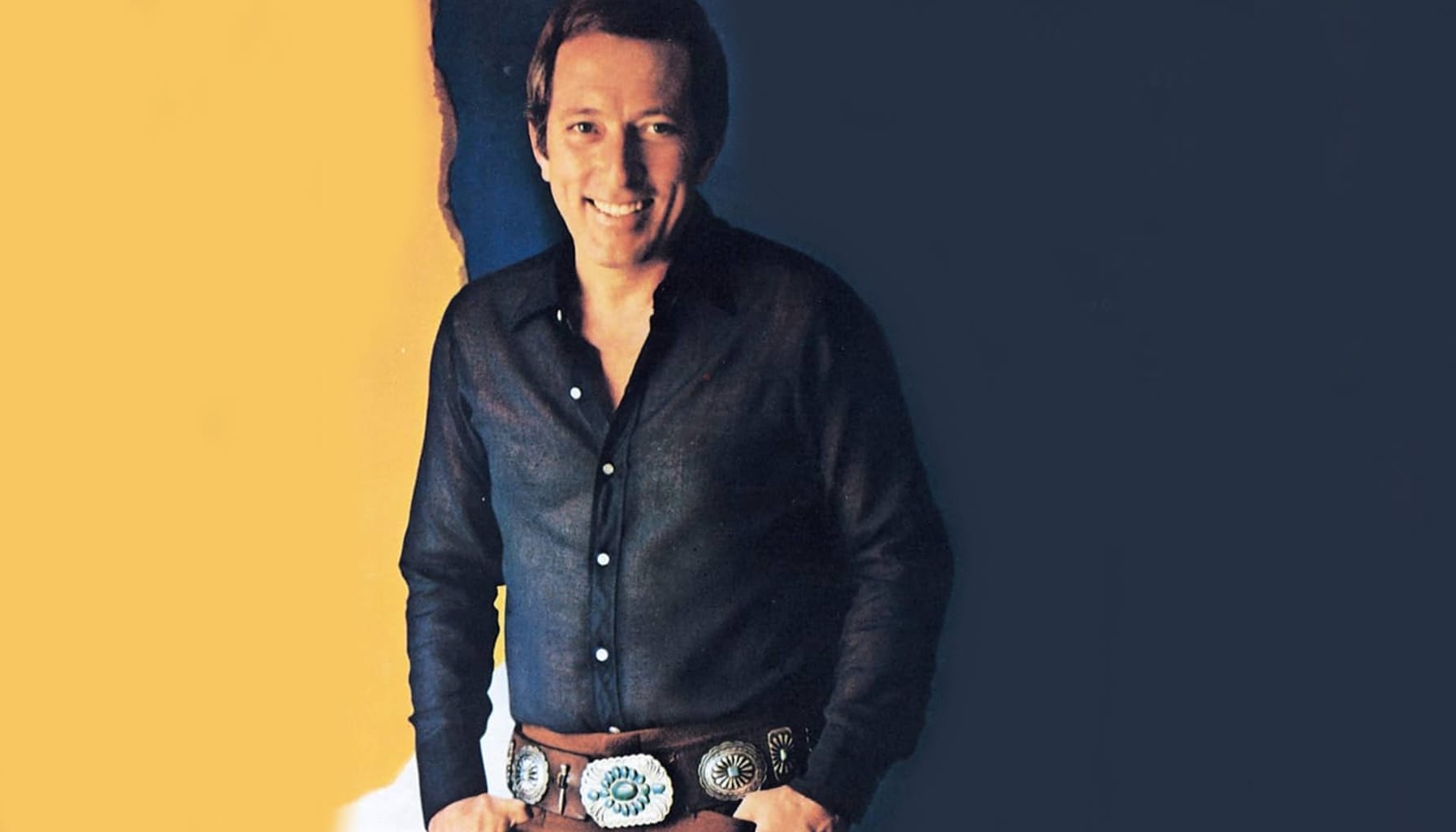
All of which brings me around to Andy Williams.
By the time he started his solo recording career in the '50s, Andy was already well known as a member of the Williams Brothers, the singin'-and-dancin' troupe he'd been a part of since being driven into showbiz by his father before he was even a teenager. His journey to post-Brothers stardom wasn't easy — at one point, he was famously reduced to eating dog food — but he eventually found his niche as a crooner of easy listening tunes, and landed at Columbia Records in the early '60s after cutting a series of sides for the small Cadence label.
Williams' Cadence records really aren't bad, but his move to Columbia coincided with his fateful decision to cover "Moon River" in 1962. Although his version wasn't a radio hit — a status that set the tone for his album-oriented career — it still became his signature song, and has long since been accepted as the definitive recording. It was also around this point that Williams made the fateful decision to become the host of The Andy Williams Show, which stayed on the air, in one form or another, through 1971.
The Andy Williams Show is the reason I thought about Jack Wagner while prepping for this post, because unlike the vast majority of his peers, Williams continued to churn out hit records long after the Beatles arrived and turned everything upside down. For most of the dinner music crowd, rock 'n' roll meant commercial death, but for Williams, it was pretty much business as usual — partly because he'd never really been a singles act in the first place, but mostly because he was on television every night.
Williams' role as host meant he was credited with providing early exposure to a wide array of future stars, from artists he didn't much care for (including Elton John) to ones he actively helped champion (such as the Osmonds). It also meant that, as Wagner put it, he stayed on the boards — even if his style of music was out of vogue, there was only so antiquated he could be with a popular TV show. All of which brings us to Love Story, which was a No. 3 hit after its release in early 1971.
Between 1958 and 1976, Andy Williams released at least one album every single year except 1961 — and during most of those years, he put out at least two albums, sometimes even three. The cynical view here is that it's easy to churn out records when you're just recording cover versions, and even more so when you've made a cottage business out of cutting softer arrangements of other artists' hits, as he tended to do after the mid-'60s. I would argue, though, that cynicism had no place in Andy Williams' music; while I certainly can't claim to know anything about his heart of hearts, everything I've read has left me with the impression that he was a willing if not outright eager interpreter of songs made famous by younger generations.
Love Story, the first of two albums Williams released in 1971, arrived as his commercial relevancy was finally starting to wane, and also (perhaps not coincidentally) around the end of The Andy Williams Show's regular run. It is, in fact, arguably his final hit LP — which isn't the reason I chose to cover it here, but lends it a little added poignant heft. Although he certainly released better-loved albums, and continued to release new material on a regular basis for another five years, I think this record, in some ways, represents Andy at his peak. The production has aged pretty well, he's in fine vocal form, and while the song selection leans fairly heavily on hit songs by contemporary artists, they're songs that land cleanly in Williams' wheelhouse.
Some of these songs, in fact, were extremely contemporary. "For the Good Times," written by Kris Kristofferson, was a hit for Ray Price in the summer of 1970; Elton John's "Your Song," meanwhile, peaked in early '71, as did "It's Impossible," which was a hit for Perry Como mere months before Williams released his version. I could go on, but you get the point, which is that he had his finger on the pulse, even if that connection manifested itself with cover versions that sounded fabulously square even as they were being recorded.
Williams' covers were square; there's no getting around that. But the thing that struck me most while listening to his music over the last day or two is the profoundly melancholic quality that so many of his records had. In retrospect, it's awfully easy to imagine him as a variation on Will Ferrell's Robert Goulet, a guy who milked the AARP set while knocking out albums of syrupy background music. But if you really listen to these albums, what you hear is a singer who's earnestly expressing his take on material that a lot of guys his age would have dismissed as teenybopper crap for longhairs. This really doesn't describe all of Williams' classic catalog — he recorded plenty of traditional pop, as well as cuts from crossover songwriters like Jimmy Webb — but it happened often enough.
The point is, whatever Andy Williams did, it felt like he took it seriously, and that honest approach to the material unlocked the qualities I think made him truly special during this period. Like I said, there's a melancholic quality to a lot of these vocals. Although Williams enjoyed a remarkable run and had a truly enviable career, he definitely knew pain; according to this absorbing essay, one of his earliest performances took place at his baby brother's funeral, and was arranged by his father in order to help defray the costs. He also had what I would describe as a fairly problematic romantic/professional relationship with Kay Thompson, which cast the mold for pretty much everything he did as an adult performer until he started recording for Columbia.
This is not to say Williams wasn't calculated or careerist when it came to his choices as a performer, or that he was always (or maybe even often) truly emotionally invested in his material. A lot of the time, it seems like he was pretty much doing what he felt like he needed to do. But listening to these performances, you don't detect any ironic distance. It doesn't feel like listening to the work of a polished vocal interpreter. Instead, it sounds like the honest efforts of a singer who's using his instrument the only way he knows how.
It's that quality, I think, that made Williams such an excellent musical tour guide for the people buying his albums throughout the '60s and '70s. The sadness in his voice gives the listener permission to indulge sadness of their own, and like any group of people who feels time passing them by, Andy Williams' target demographic was pretty damn sad during this period. They'd gone from Percy Faith to the Jefferson fucking Airplane in the span of a decade; nothing seemed normal, and everything was chaos. If they had to listen to James Taylor or the Beatles, then at least a voice they trusted could make those songs a little safer, and do it with enough bruised overtones to let them know he understood some of what they felt.
Fifty-five years after its release, Love Story remains a soothing listen. Again, I doubt it's the first title anyone would reach for if they were trying to make a case for Andy Williams' place in the pop culture firmament, but I think it hits him in just the right spot as a performer — seasoned but not yet weathered, an elder statesman but not yet fossilized, buttressed by sympathetic arrangements and production that doesn't fully indulge the worst trappings of its own or other eras. A classic in its own right, in other words, and still a record that does a fine job of offering the listener permission to be sad while including a series of tacit, bittersweet reminders that no feeling lasts forever. It was square then and it's square now, but in that respect, Love Story feels awfully timely.