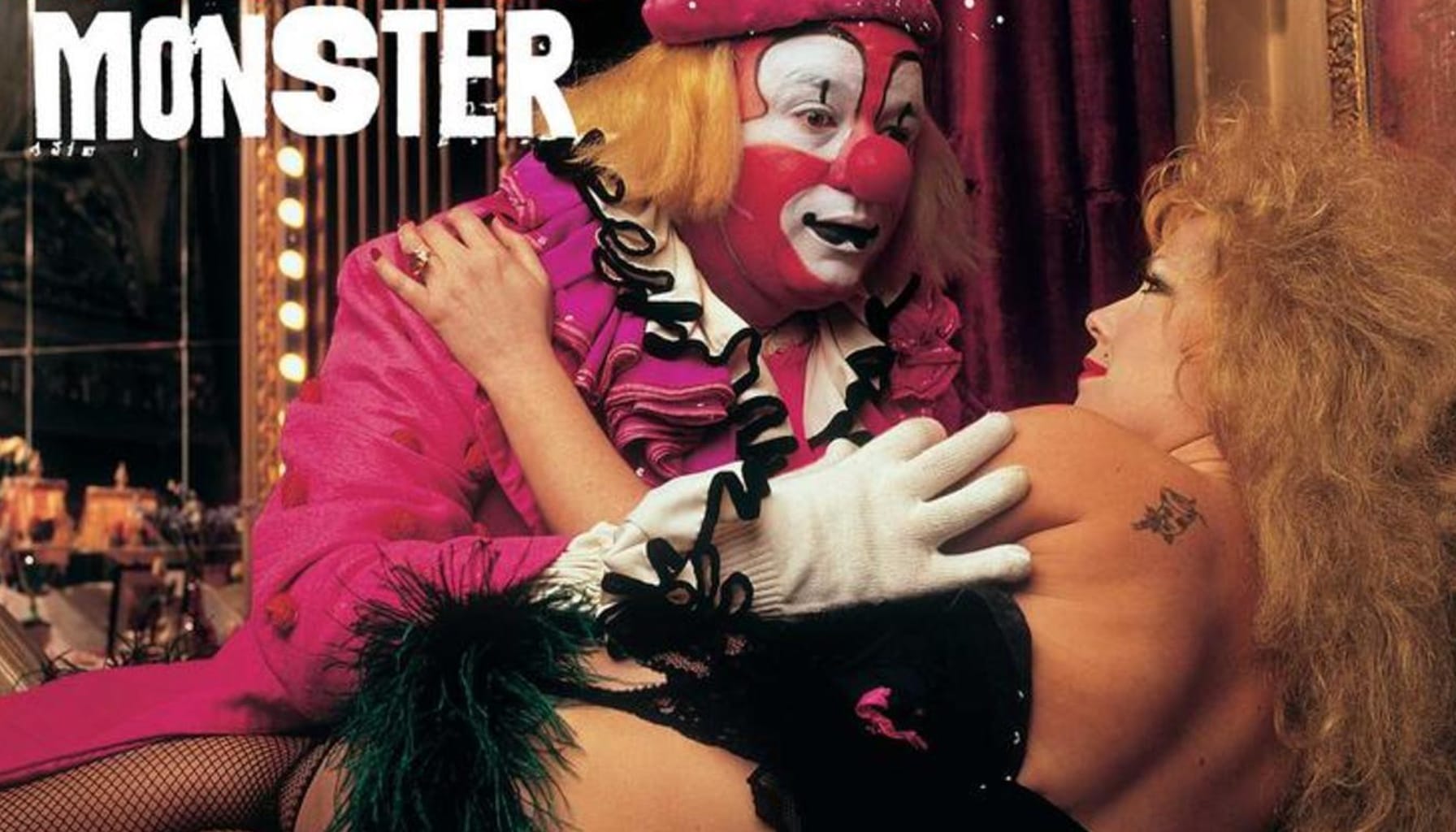
Major Letdowns: Cheap Trick, "Woke Up with a Monster"
Whatever happened to all this season's losers of the year?

It's been a long time since a major act released one that anybody really cared about, but live albums used to be huge sellers — particularly after the advent of arena rock in the '70s, when louder sound systems allowed audio engineers to better harness the controlled chaos of a great rock 'n' roll concert. In some cases, the difference between obscurity and multi-platinum status could come down to adding a screaming crowd and the booming reverb of a big venue.
Having a hit with a live album could also be a bit of a mixed blessing, however, especially for an artist who'd never really had a hit with a studio recording. Part of the point behind most of these arena rock concert LPs was to make the band sound bigger; in comparison, it only stands to reason that the studio tracks would feel like they were missing something somehow. The intimacy of listening without all that extra noise in the way can be awkward if you haven't already built up to it beforehand.
It can also, I think, raise the question of what the artist is "supposed to" sound like. This wasn't an issue for a live album beneficiary like Kiss, because their sound was essentially just yelling at you while they tried to fuck everything in sight, and that worked perfectly in concert. But for other acts, all that crowd noise and cavernous echo didn't necessarily align with their actual sonic palette, and when it went away, it left the music sounding diminished.
That might be as good a way as any of establishing a little bit of context around Cheap Trick's cattywampus sales trajectory, which found them futzing around just below the mainstream radar for a couple of years before skyrocketing to stardom with their fourth release, Cheap Trick at Budokan. Originally intended solely for release in Japan, the Budokan record built a little momentum as a promo, at which point Epic Records figured they might as well throw another piece of spaghetti at the wall, and the rest is history.
Having achieved accidental sales glory, the members of Cheap Trick were faced with the onerous question of what to do next, and they basically spent the next decade getting the answer wrong in one way or another. To be fair, I'm not sure there really were any right answers; again, scoring your first big fat hit with a live album poses a number of thorny problems that are hard to avoid getting poked with later on. We've already outlined the issue of "live" vs. "studio" sound, but there's also the fact that with Budokan, the band was giving new fans the cult-act equivalent of a greatest-hits record; there's no way in hell their next LP was ever going to be able to match its track-for-track consistency. There's also the fact that Cheap Trick had lived and toured with the Budokan songs for months on end, so the performances captured on that album were looser and more confident than anything you'd be able to come up with after a couple of demo sessions and a few weeks in the studio.
There's also, I think, the problem of how a label tends to look at you after you've fluked your way to the top of the charts and handed them a big pile of found money. To put it another way, I'm not sure anyone at Epic ever really understood why so many people loved Cheap Trick at Budokan, and I'm also not sure they felt overly compelled to figure it out. They'd captured lightning in a bottle by chucking product into stores, so as long as the group kept touring like dogs and handing in relatively inexpensive albums every 12-18 months, they had enough rope to keep trying and failing for awhile.
All of which is to say that Cheap Trick's post-Budokan story is chock full of records that were supposed to be better than the ones immediately preceding them, but which were always undone by some damn thing or other. They worked with George Martin, Todd Rundgren, and Jack Douglas. They tried sweetening their sound; they tried going back to their rock 'n' roll roots. The albums produced during this period were never all bad — or even close, really — but they were also never quite what people wanted from Cheap Trick, or at least not enough of it. The frustrating and truly unfortunate thing about all this is that record buyers turned up their noses at some pretty terrific singles while all this was going on; if you listen to "If You Want My Love" or "Tonight It's You" and then look at their embarrassing chart peaks, you're liable to come away wondering just what the hell people were even looking for at the time.
What it all comes down to is that by the end of the '80s, Epic's patience had finally started to run out, which resulted in the standard come-to-Jesus move that labels pulled on commercially downtrodden veteran acts of the era: Either record some songs by outside writers, or you're out of a contract. Backs against the wall, Cheap Trick cut a handful of non-originals for 1988's Lap of Luxury, one of which was the power ballad "The Flame," which soared all the way to No. 1, presenting the band with a fresh set of problems in the bargain.
Like a lot of their peers who'd pulled the same move, Cheap Trick faced no shortage of scorn over their big power ballad hit. Unlike most of those acts, they actually had a legitimate axe to grind against the fans and critics who slagged them for recording "The Flame." Groups like Chicago, Starship, and Heart all went through periods of severe creative drift before bringing in material by other writers. Cheap Trick, on the other hand, stayed on fairly solid footing — they just couldn't get arrested no matter what they did. If people tune you out when you're doing your best, they don't really have room to talk when you give up and decide to coast for a bit.
Just as importantly — and here's where I lose the remaining Cheap Trick fans who might have still been listening — Lap of Luxury isn't bad enough to complain about. Not only is it a solid 1988 rock record, it's fairly identical to most of its predecessors in terms of wheat to chaff. I would argue the same of its follow-up, 1990's far less successful Busted, which basically repeated the Lap of Luxury formula to diminishing returns. But at this point, the musical content didn't matter as much as the narrative surrounding the band, which had grown so loudly dismissive of their supposed creative direction that it drowned out most of the sound they were actually making.
(This being said, "Wherever Would I Be" sucks ass.)
If the AOR era had continued past 1991, it's kind of hard to imagine where Cheap Trick might have ended up on the respectability spectrum. But again unlike many of their peers, they actually benefited from the advent of "alternative" rock, because all those flop records they released in the '80s helped make them cult heroes. The old Cheap Trick story was that every album was disappointing in a unique way; the new Cheap Trick story was that they'd been unjustly ignored for years while churning out some of the best hard rockin' power pop the world had ever known. Fortunately for them, this started happening right around the time their contract with Epic came up for renewal; faced with the opportunity to poach a competitor's new/old cool thing, Warner Bros. stepped up with a ludicrous ten-album deal.
At first, it seemed like the stars were finally aligned for the boys from Rockford. They were cool in the eyes of a new generation of kids, they had a supportive label, they had producer Ted Templeman in the studio with them, and they had a year and a half's worth of songs stored up for the album destined to finally — FINALLY — distill all the greatness that had proved so frustratingly elusive for so long. But once again, a series of mishaps and missteps conspired to send the band thudding back to earth once more.
For starters, Warner Bros. was entering a period of turmoil. Long known as a safe haven for artists, the label entered the mid-'90s in the midst of a corporate purge, starting with the ouster of longtime leader Mo Ostin and his right-hand man Lenny Waronker. This cratered the support that had girded their very silly ten-record deal — and helped end the long tenure of legendary staff producer Ted Templeman, who'd been instrumental in bringing them to Warners, and who also produced Woke Up with a Monster — which meant that no matter what kind of record they might have ended up handing in, odds were pretty high it would have been dead on arrival.
The other — and much more annoying — problem is that with Woke Up with a Monster, Cheap Trick delivered pretty much the same goddamn album they'd been making for as long as anyone could remember. You had some outright rockers, you had some Top 40-friendly uptempo numbers, you had a ballad or two. Were they of uniformly stellar quality? No, they were not. And while every track included at least a co-writing credit from one or more members of the band, plenty of them were written with professional songwriters or top-shelf ringers: Jim Peterik, Mark Spiro, the mighty Michael McDonald, Terry Reid, Todd Cerney.
I'm not saying the results were all subpar — McD co-wrote my favorite song on the record, the savagely snide "Tell Me Everything" — but I am saying you could definitely hear the sound of the label and the band hedging their bets. Woke Up with a Monster is the type of record that uses its opening track (in this case, the grinding "My Gang") to try and fool you into thinking it's something it isn't, and then spends the next ten tracks whittling away at your expectations in the hope that you'll end up talking yourself into liking it.
None of this prevented the band from beating the drum for Monster as the long-awaited corrective to its overdone predecessors. "This record is full of the same energy we put into our first few records back in the '70s. When we're heavy, we're heavy, y'know. We just like to work," guitarist Rick Nielsen said. "This is the first album of the second half of our career."
Nielsen turned out to be mostly right, albeit not in the way he probably expected. Released in March of 1994, Woke Up with a Monster peaked at a miserable 123, the lowest showing for any Cheap Trick record since their self-titled debut stalled several rungs outside the Top 200 in early 1977. This was partly due to all that turmoil at the label, but it certainly wasn't helped by the fact that the album didn't have the guts to fully put a middle-aged spin on the more unpolished sound popularized by the younger acts whose CT fanhood helped make the band cool again. If they'd fired off an LP full of stuff that sounded like "My Gang" or the title cut, that would have been one thing; instead, they larded up the track listing with wannabe pop hits like the abysmal "Never Run Out of Love" and putrid castoffs like "Ride the Pony," which wasn't good enough for frontman Robin Zander's solo record but somehow found a home here.
The end result was an album that tried to be numerous things to many different people, and as a result, ended up pleasing precious few. By the time Cheap Trick hit the road in support of Woke Up with a Monster, the writing was more than on the wall; when asked how the tour was going, bassist Tom Petersson quipped, "Except for no radio play, no MTV play and no record sales, it's great."
The rub here is that Woke Up with a Monster isn't a bad album per se. I wouldn't say it's particularly inspired, but I don't think that was really the issue. The real problem with this band has always been the continual promise that their next record would finally be the one to bring that Budokan magic into the studio; that instead of just being a ferociously talented group of musicians who are simply best seen live and whose albums are always more inconsistent than you want them to be, they were perpetually the victims of bad timing, or the wrong producer, or the wrong label. I think what ultimately sunk Monster is that it isn't really any better or worse than Busted or Lap of Luxury or most anything else in the group's catalog. On one hand, that type of consistency is to be admired; on the other, you can't keep telling people "this one's finally the one" forever. Eventually, they'll start tuning you out.
The new team at Warners certainly tuned them out, opting to torch that ten-album deal while copies of Woke Up with a Monster were still filtering their way through used CD bins at finer music emporiums across America. Once again, Cheap Trick went back to the drawing board, this time signing with the indie imprint Red Ant to release a 1997 self-titled effort that really did restore a substantial portion of the raw rock muscle that critics perpetually claimed to be missing from later efforts. Once again, Nielsen claimed this was "the first album of the second half of our career," only to watch helplessly as Red Ant's extremely bankrupt parent company offloaded the label to an investment banking group mere weeks after Cheap Trick's release.
"When it came out, I said it was the first record of the second half of our career," Nielsen joked a couple of years later. "And it did the same as the first album in the first half of our career — not much."
In a sense, the Red Ant debacle did begin the second half of their career. Throughout the nearly 30 years that have followed, they've continued finding ways to put out new records, all of which have been greeted as their best since [insert year or Cheap Trick album title here] by critics. They've self-released, they've done licensing deals, they've even released a Christmas album. The new stuff doesn't sell, but at this point, no one really expects it to. Unburdened at long last from the weight of their brief multiplatinum era, they're free at long last to be nothing more than they ever were — an entertainingly quirky power pop band with a sharp sense of humor and a reliable ability to give you at least a couple of terrific songs on every album.
This is worth celebrating, but we can't avoid noting that this era has dawned on a version of Cheap Trick that's been progressively diminished in certain ways. They infamously fired drummer Bun E. Carlos in 2010, leading to a lawsuit, and while Zander can still bring it most nights, his voice has lost a few miles per hour off its fastball now that he's in his 70s. Nielsen, meanwhile, is creeping up on 80, and all those years of lugging around ridiculous five-necked guitars have taken their toll. One way or another, time comes for us all.
In a way, though, this just underscores the working-class tenacity that's always been the through line in Cheap Trick's catalog. It's hard to find an interview with a member of the band that doesn't include a quote that reads something like "We aren't rich, but that was never the plan anyway," and the way they've approached their career reinforces that. Like the rest of us, the members of this frequently entertaining, frequently confounding band spent a long time taking the wrong lessons away from teachable moments. There's always something sad about this — youth wasted on the young and all that — but there's also something profoundly human as well.
Most of us act without giving a lot of thought to however the thing we're doing might impact our legacy, so to speak; unlike a lot of their peers, Cheap Trick have always seemed to operate the same way, just trying to make their best art in the moment without spending too much time deliberating over whether it was perfect, then dusting themselves off and trying again every time they fell short. The more I think about all this, the more hard pressed I am to come up with a more identifiable arc for an artist. I might not feel like listening to Woke Up with a Monster very often, but in some fairly fundamental respects, I think I might admire the hell out of it.