Thanks, Amy
Today I must write about Amy Grant

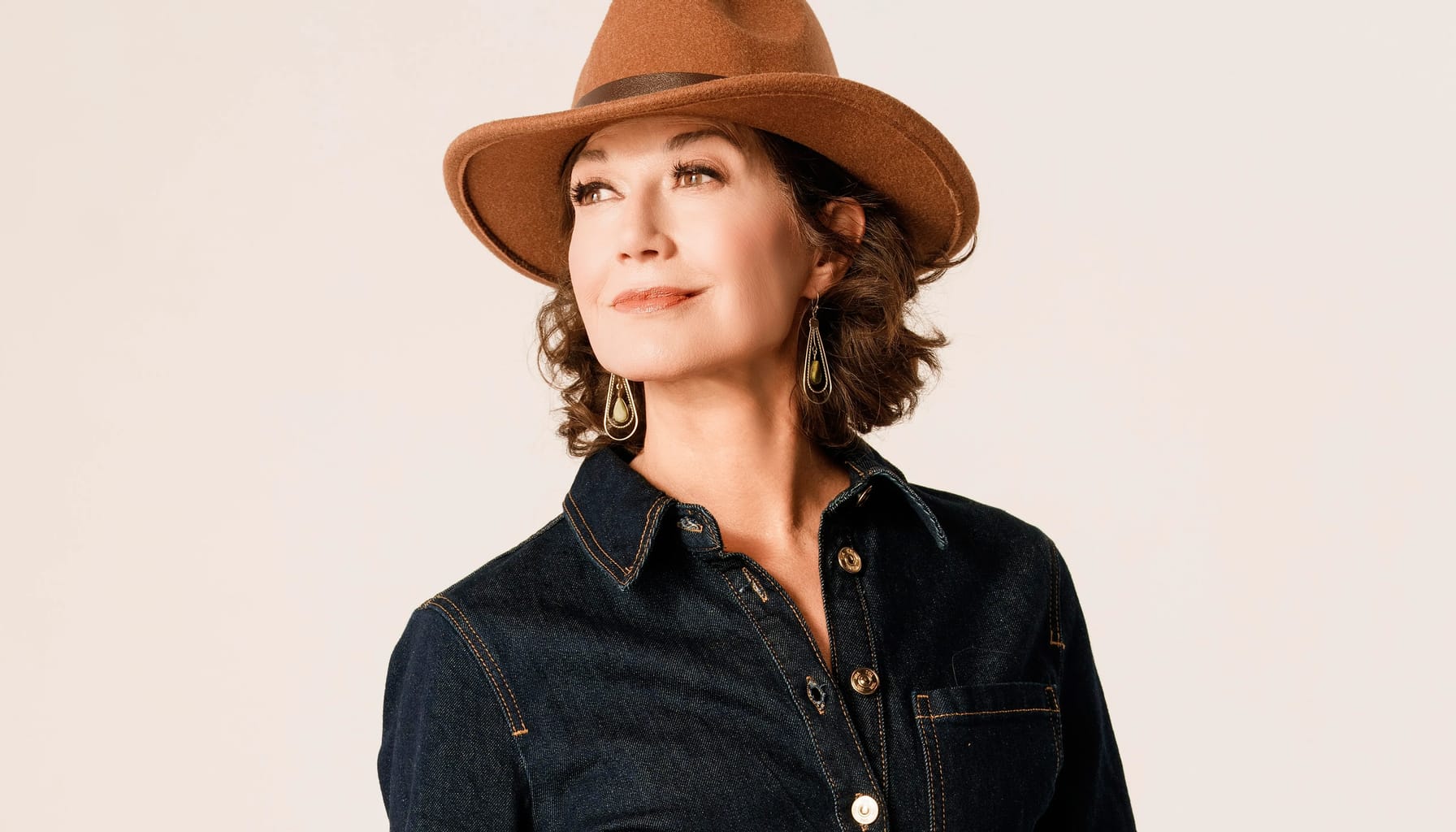
I've threatened on more than one occasion to write a complete post (or series of posts) on the weird late '80s/early '90s boomlet of CCM artists who crossed over into the pop market. This will not be that post. Today, I just want to talk about Amy Grant.
Of course, you can't talk about that CCM boomlet without spending a lot of time focusing on Grant, who paved the way for every act that followed — first by modeling how they could adopt pop production trappings and vague up their lyrics without compromising their core values, and then by proving these tactics could pay real dividends on the charts. She started angling toward pop stardom with 1985's Unguarded LP, then split a No. 1 single with Peter Cetera as his duet partner on "The Next Time I Fall." Her next album, 1988's underrated Lead Me On, positioned her as an occasionally spiritual singer/songwriter with socially conscious leanings — and then, with 1991's Heart in Motion, she went full-on pop in a major way, putting together a master class in how to have your Christian cake and eat it too.
Motion served as the template for pretty much every CCM crossover that followed at the time, and for good reason — it couldn't toe the line between faith and commerce more artfully if it had been engineered in a lab. The production is perfectly of the moment, the songs are ruthlessly catchy, and the religious leanings in the lyrics are, for the most part, easy to miss and/or ignore. On top of it all is Grant's cable-knit sweater of a voice, an instrument adept at conveying yearning, whether it be of the spiritual or romantic variety.
Heart in Motion spun off four Top 20 singles; with her 1994 follow-up House of Love, she added two more pop hits. Her next record, 1997's Behind the Eyes, found ready purchase at adult contemporary stations, but her Top 40 days were behind her — which seemed to be just as well for Grant, who was at a career crossroads thanks to judgy Christian music fans who were aghast over her divorce from her asswipe of a husband. In the years since, Grant has largely retreated from the mainstream, tending to focus on worship records and collections of Christmas songs; a couple of relatively recent serious health scares made new pop music even less of a priority. She scaled the mainstream mountain, and she's happily married to an Eagle. What does she have left to prove?
All of which is to say it came as a total surprise when I learned that on January 5, Grant released a new single that not only courts the mainstream, it openly and unmistakably engages with current events. "The 6th of January (Yasgur's Farm)" is a song that makes its intentions plain starting with its title, which promises — and rather artfully delivers — a mournful meditation on the Woodstock generation's culpability in our current and gut-wrenchingly sad state of affairs.
Of course, Grant has always been an artist prone to fuzzing the lyrical line with stuff like this, and "6th of January" — which, it needs to be noted, she did not write — follows that tradition. Anyone expecting her to flip an overt middle finger toward the Republican Party will come away disappointed. On the other hand, anyone who can't read between the lines of these lyrics deserves disappointment:
We’re driving home and the radio plays
"What’s Goin’ On?" Marvin Gaye
Is it right on red or left on MLK
I look ahead and realize we’ve lost our way
Hey mister, where’s the road to Yasgur’s farm?
He stares at me with pity and alarm
Says "That crowd left here long ago
"Scattered all to hell and Harper’s Ferry
On the 6th of January"
It's true that using Woodstock as a touchstone for anything is a woefully overdone move at this point. But I would argue that contrasting the idealism of the late '60s against the proudly rapacious fuckery of 2026 — and pointing out that neither would have been possible without a lot of the same people — is still effective, and I think this song does a fairly fine job of supporting its arguments.
I don't want to oversell "The 6th of January (Yasgur's Farm)." It likely isn't destined to be one of Grant's best-remembered songs, although that probably says just as much about her enviable discography as it does about the track itself. As a piece of music, it's reasonably stirring. As a statement made by an artist who didn't have to make it, though? Again, I don't want to oversell this, but I think it's actually fairly moving. I'm sure true Grant fans aren't surprised by it — this is, after all, the artist who paused a recent concert to publicly shame a Republican senator in an effort to secure continued PEPFAR funding, and before that, dismissed criticism of her decision to host her niece's same-sex wedding — but advocating for charitable work and saying "love is love" aren't really the same thing as releasing a single that deliberately evokes memories of the awful day the White House's current occupant tried to leverage violence in order to invalidate a lawful election. Given that Grant's longtime pal and occasional musical collaborator Michael W. Smith is a well-known Christian nationalist, it's more than likely that a percentage of her own fanbase supports this administration.
Again, Amy Grant doesn't need to worry about where her next meal is coming from, and she's had 25 years of learning how to live her life while politely telling fundamentalists where they can stick it. Still, there's a part of playing for the public that rests on acknowledging the public's role in how you got to where you are, and even if Grant is no longer the twentysomething CCM starlet who made a calculated run for pop stardom, there's no way she recorded "The 6th of January (Yasgur's Farm)" without thinking about how it'd sit with some of her fans. The fact that she went ahead and did it anyway gives me a little bit of hope.