The One After the One-Hit Wonder, Part 8
Top 40 success can be so fleeting. Just ask these artists

"Bedsitter," Soft Cell (did not chart)
While fully acknowledging that this makes me a traitor to my generation, I must take this opportunity to say I've never, ever been a fan of Soft Cell's "Tainted Love" (and/or "Tainted Love/Where Did Our Love Go?"). That whole primitive drum machine + affectless vocal shtick has never done a thing for me, but having said all that, even I have to admit it does what it does pretty well; the ineffable catchiness of the classic songs they're covering is highlighted by the machine-driven arrangement and bored vocal delivery seem to be doing everything in their power to sublimate it. Listening to "Bedsitter," you can almost hear the panic that must have been felt by the band's label when it came time to pick a follow-up single — this is drone-y stuff, the type of thing you can imagine being used to score footage of driving through East Berlin in 1981. While it inexplicably went Top 5 in their native U.K., "Bedsitter" — like every Soft Cell single to follow — failed to chart over here.
"Caroline," Concrete Blonde (did not chart)
Prior to their No. 19 1990 hit "Joey," Concrete Blonde released seven singles that failed to chart, so that hit looked a lot like a fluke even before it dropped off the Hot 100. I have no way of knowing whether or not this is true, but I choose to believe that when it came time to choose a follow-up, Capitol execs looked at the rest of the Bloodletting track listing, picked another song named after a person, and hoped for the best. Snake eyes on that roll — "Caroline," like everything else the band released before and after "Joey," sputtered out below No. 100 — but there's really nothing wrong with this song, and in retrospect, Johnette Napolitano and her crew should have had a much bigger share of the '90s alterna-spotlight.
"Sweetness," Jimmy Eat World (peaked at No. 75)
For some acts, it's as much about the moment as it is about the song — and as we all know, songs last longer than a moment. So it went for Jimmy Eat World, whose big hit single, "The Middle," benefited from a confluence of beneficial factors; a new cash-flush label, emo's brief mainstream ascendance, and a truly hooky song sent them soaring, however briefly, into the Top 5. Follow-up single "Sweetness" is nothing to sneeze at, but it's far more ordinary than "The Middle," so it isn't hard to understand why it crapped out 70 spots lower than its predecessor.
"No One for Me to Turn To," Spiral Starecase (peaked at No. 52)
One of several bands that latched onto the idea of "rock with horns" in the late '60s, Spiral Starecase were set apart by vocalist Pat Upton, whose elastic range ensured that the band's big hit, "More Today Than Yesterday," sounded like something more than a Chicago or Blood, Sweat & Tears clone. Unfortunately, by the time "Yesterday" took off, the band was already falling apart, which meant that when Columbia failed to strike paydirt with its follow-up singles, the lineup was only to willing to move on to other things. It's a shame; I haven't heard the rest of their only album (titled More Today Than Yesterday, natch), but there isn't a thing wrong with "No One for Me to Turn To," and the fact that both of these songs were written by Upton suggests fans of brass-backed rock were robbed of what might have been a really interesting discography. Spiral Starecase should have been allowed to have their own Chicago 17, you guys.
"Hair of the Dog," Nazareth (did not chart)
Nazareth are, by definition, a one-hit wonder, but only by definition. While it's true that their sole pop hit came courtesy of their decision to cover Felice and Boudleaux Bryant's "Love Hurts," there's a whole iceberg under that Hot 100 tip — including "Hair of the Dog," which was hilariously chosen as the follow-up to "Love Hurts" when, one imagines, panicked A&M label execs realized the band hadn't recorded another single goddamn note that seemed even slightly suitable for Top 40 radio. (Did the radio edit find a way to obscure the payoff line "Now you're messin' with a son of a bitch?" I have no idea, but I think it might have.)
I've written about "Hair of the Dog" and the story behind it before, so I won't waste everyone's time by doing it again. Suffice it to say that this is a great example of a flop single from a group that was never really meant to mess with the pop charts anyway. This song kicks ass.
"Mixed Up World," Timex Social Club (did not chart)
Old R&B fans know there's a post or two to be written about the history of the Timex Social Club and/or Club Nouveau, and I don't know how to fit it all into a couple of paragraphs, but I'll try. Basically, the Timex Social Club was originally called the Timex Crew, and their big hit "Rumors" was originally recorded for and released by producers Denzil Foster and Jay King. Shortly after the first version of the song was released, the group re-recorded it for a different label — the Fantasy-distributed Danya imprint — and that version ended up peaking at No. 8 on the Hot 100. Incensed, Foster and King assembled Club Nouveau, and released the "Rumors" answer song "Jealousy," followed by a No. 1 pop hit with their cover of Bill Withers' "Lean on Me." By the time that song topped the charts, Timex Social Club were basically no more, but since 2011, they've had a new lineup — one which rather confusingly features singer Valerie Watson, who's also still a member of Club Nouveau.
Like I said, there's a post or two to be written here. Anyway, "Mixed Up World" is fine, albeit a couple of minutes too long to work as a single. "Rumors" is probably the only thing you needed from this group.
"Love Song for a Savior," Jars of Clay (did not chart)
One of these days, I'll get around to publishing a post (or series of posts) about the CCM/pop crossover explosion that rumbled, on and off, throughout the decade between 1986 and 1996 — an explosion that, I will argue, started with the Amy Grant/Peter Cetera duet "The Next Time I Fall" and ended with Jars of Clay's "Flood."
Like every other CCM/pop crossover hit, "Flood" didn't really sound like a Christian pop song; if anything, it sounded like a sped-up version of something Collective Soul might have recorded on a Wednesday. It's fine, if a bit treacly, with vague allusions to Noah's ark offering enough downcast emotional ballast to help the band fit in with the fading echoes of the grunge movement. (It was also produced by Adrian Bellew, who I hope was paid handsomely.)
"Flood" was fairly unique among Jars of Clay songs in that you could listen to it without thinking about the band's religious leanings. As an example of what you'd hear if you listened to the rest of their debut album, here's "Love Song for a Savior," which gets its first Jesus mention out of the way within the first 30 seconds and boasts a refrain that coos "I want to fall in love with you." It's catchy and all, but there was no way this was ever going to chart. Not that it needed to — Jars of Clay went platinum, and the group's still active today.
"Shut Up and Let Me Go," the Ting Tings (peaked at No. 55)
As has been well documented here, I am perpetually a sucker for snotty nyah-nyah songs with playground beats, which is half of why I have been periodically singing "They call me Stac-ey" to my children at random intervals for the last 17 years. (The other half of why is that they hate it. I am many things, but I might be mainly a dad.)
The Ting Tings' "That's Not My Name" is a pretty perfect pop nugget — you might hate it, but I'm not sure there's a convincing argument against the way it burrows into the memory banks, or the way its snotty 'tude and machine-driven beats offer young listeners a sort of Sleigh Bells with training wheels. Unfortunately, once you've released a perfect, undeniable pop single, there's nowhere else to go but down, and "Shut Up and Let Me Go" is nothing if not a diluted version of "That's Not My Name."
"I've Gotta Make You Love Me," Steam (peaked at No. 46)
"Na Na Hey Hey Kiss Him Goodbye" is one of those songs that feels like it might have been released during the first chapters of the Bible. Although it went to No. 1 in late 1969, it was an anachronism even then. As a kid hearing it in commercials and at various sporting events, it felt like something plucked from the depths of a Motown compilation — a song with no story, just immutable staying power.
As it turns out, there's really sort of a hell of a story behind "Na Na Hey Hey Kiss Him Goodbye." In its earliest form, it was part of the set list for an early '60s doo-wop group called the Chateaus; they never really went anywhere, but their pianist, Paul Leka, later got a job as a staff writer and producer for Mercury, where he persuaded his higher-ups to let him sign his former Chateaus bandmate Gary DeCarlo. Recording as Garrett Scott, DeCarlo entered the studio with Leka and another ex-Chateau, Dale Frashuer, to cut what was supposed to be his first single, a song called "Sweet Laura Lee." In need of a B-side, they reached back to their Chateaus days for "Na Na Hey Hey Kiss Him Goodbye."
After hearing it, the head of Mercury at the time, a man named Bob Reno, insisted that their B-side was really their A-side — but when Leka and DeCarlo said they were afraid it'd damage DeCarlo's budding career to release what they viewed as a subpar single, he was flexible enough to funnel it through Mercury's Fontana imprint and attribute it to a made-up band dubbed Steam.
To their credit, when the single took off, Leka and DeCarlo didn't change their plans for Garrett Scott; instead, Leka put together a touring Steam lineup consisting of musicians who had nothing whatsoever to do with the song people were lining up to watch them perform. Steam never had another hit, and never released another album after 1970's Steam, but it didn't matter; "Steam" was a touring act until 2006, trotting out various lineups that never once included anyone who sang or played a note on "Na Na Hey Hey Kiss Him Goodbye."
As for "I've Gotta Make You Love Me"? It sounds like a song that went to No. 46 pretty much purely because its predecessor went to No. 1.
"Do You Want to Dance," McFadden & Whitehead (did not chart)
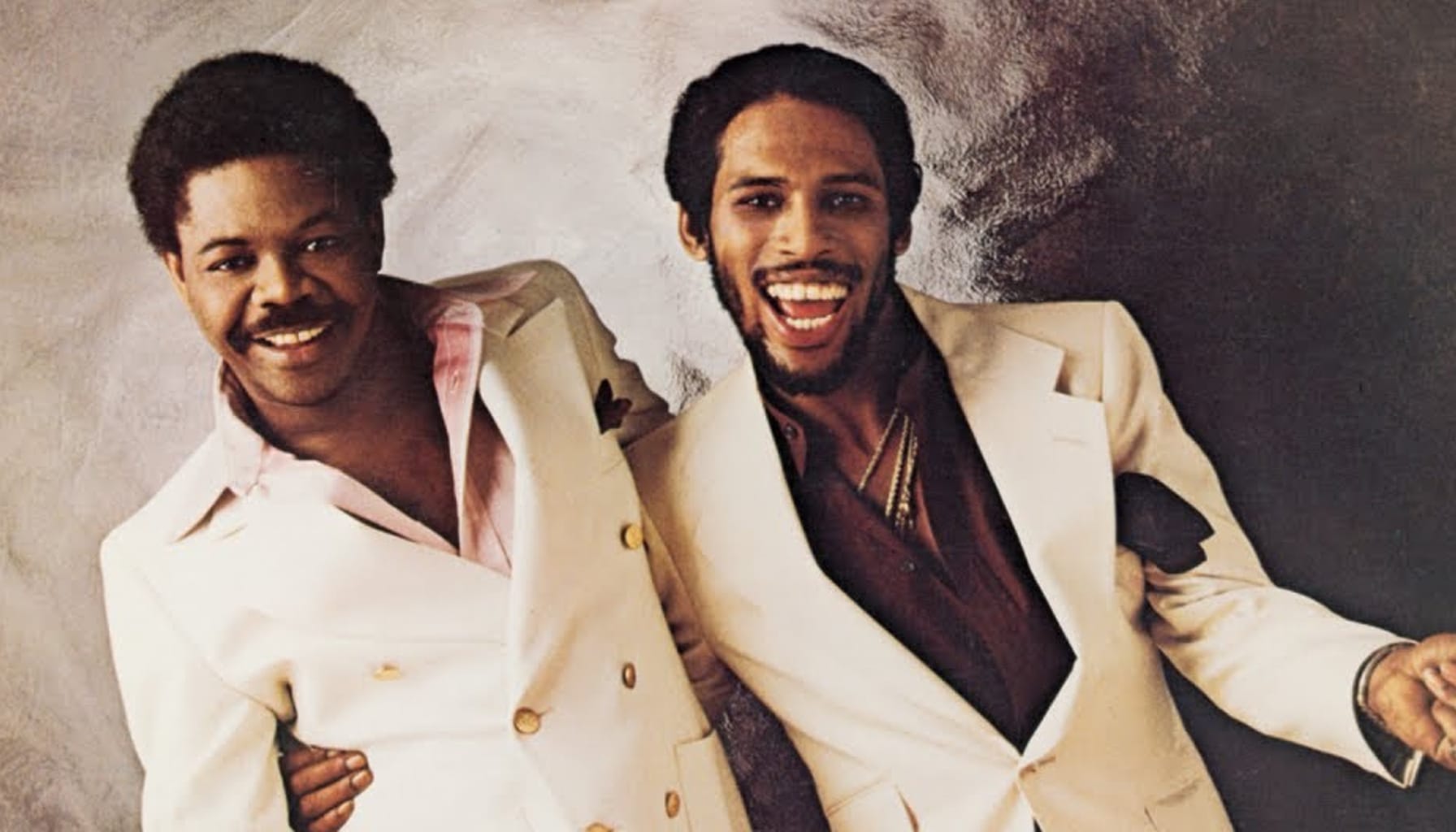
Today, McFadden & Whitehead are mostly remembered as a couple of guys who scored one of the bigger hits of the disco era ("Ain't No Stoppin' Us Now") and then promptly faded from view, but behind the scenes, they had more in common with Ashford & Simpson than Van McCoy. Groomed for success by yet another duo, Gamble & Huff, Gene McFadden and John Whitehead wrote a series of hits for other artists — most notably "Back Stabbers" for the O'Jays — before setting out on their own. "Ain't No Stoppin' Us Now" proved an inaccurate title in terms of their recording career, but I think that had more to do with their association with the rapidly waning disco movement than their talent as singer-songwriters; while "Do You Want to Dance" is a seven-minute dancefloor anthem delivered by guys dancing in white suits on their album cover, it could just as easily have been recorded as a three-minute R&B number.
Unfortunately, we never got to hear what McFadden & Whitehead might have gotten themselves up to during later eras, because after releasing a pair of commercially ill-fated follow-up LPs, they sputtered out. What happened next is sadder still, so let's not get into it here; instead, just dance your ass off to "Do You Want to Dance."