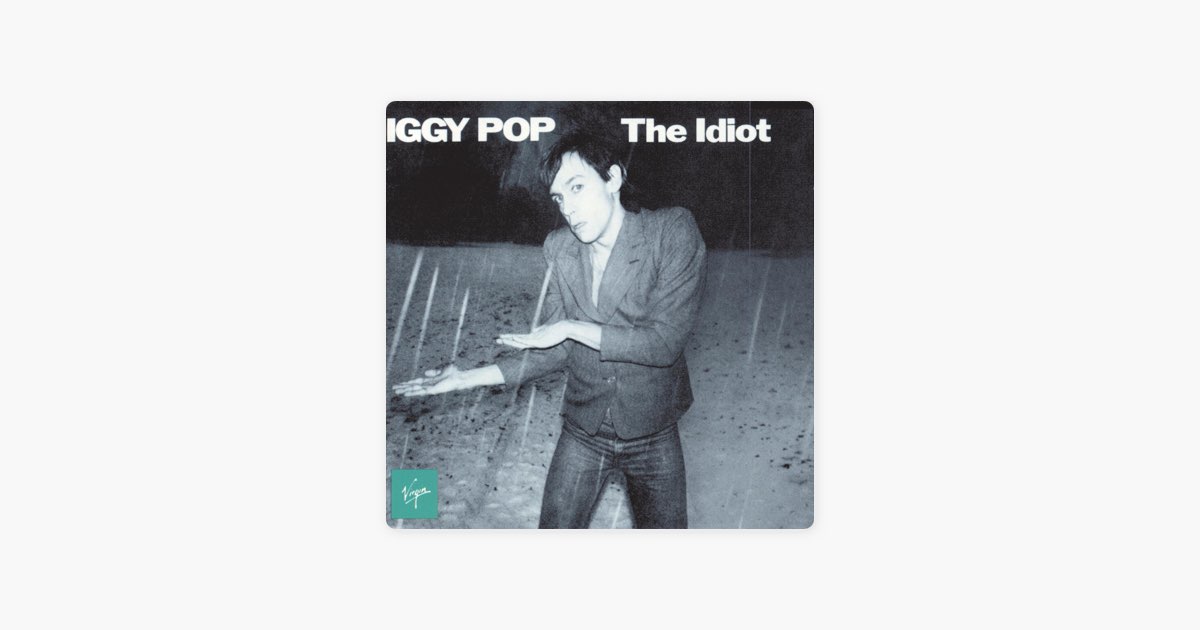
Blindspotting: Iggy Pop, "The Idiot"
All aboard for funtime

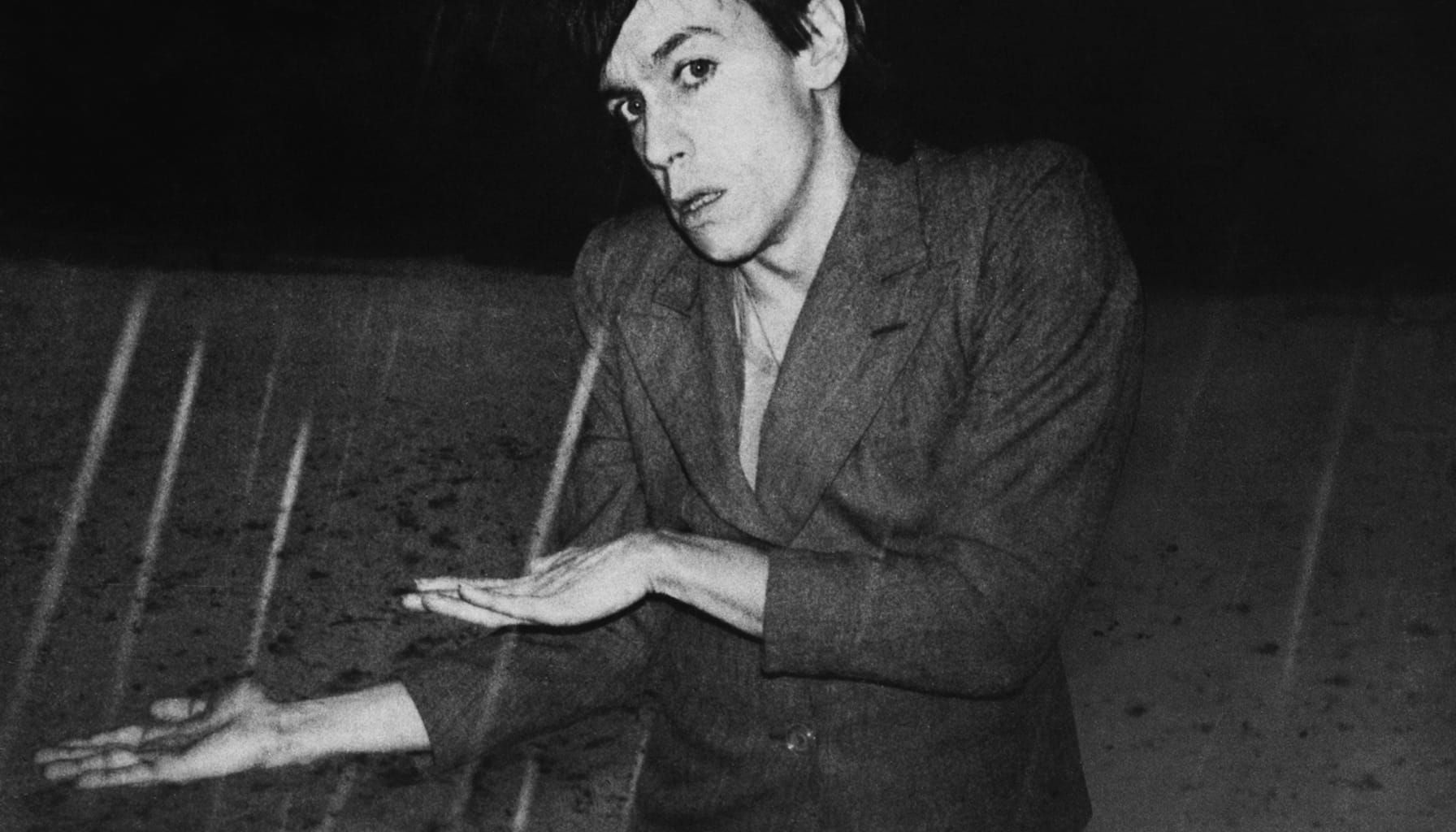
The Legacy: Where do we begin? At this stage of Iggy Pop's career, the story behind any particular album could fill its own book; it's hard to offer a brief overview of any of the moves he made during this period without being justifiably accused of glossing over important information. But I'll try anyway.
The Idiot, Pop's solo debut, arrived three years after the implosion of his breakthrough band the Stooges. That was basically an eternity in '70s rock 'n' roll years, especially in the context of the move fast/break stuff punk aesthetic Iggy and the Stooges performed in, but there were good reasons for the long layoff — primarily Pop's perilously faltering health, which was severely compromised due to his serious drug addiction. Feeling abandoned by many of his friends, Pop bonded with David Bowie, who visited him during some of his numerous hospital stays; having already tried and failed to cut a record, they resolved to take another shot at making music together once he was better. It was later revealed that Bowie privately doubted Pop would survive long enough to manage much studio activity; he was proven wrong, of course, and after getting clean, Pop joined Bowie on his 1976 Station to Station tour.
When it came time to book a studio for their next collaboration, Bowie and Pop both felt the need to get out of Los Angeles for their own mental and physical health, so they decamped to Château d'Hérouville in France for a couple of months. Bowie, who must have been feeling particularly creatively fertile, wrote much of the music that went into The Idiot, with Pop contributing lyrics. His vocals were tracked in Munich, at a studio owned by Eurodisco/new wave godfather Giorgio Moroder, and it was finally mixed in Berlin courtesy of frequent Bowie collaborator Tony Visconti, who had the unenviable task of trying to wrangle Bowie's demo-style production approach into something that sounded like it belonged in record stores.
(This wasn't the first time Bowie and Pop had collaborated on something of a sonic mess — their work on the Stooges' final album, 1973's Raw Power, was infamously muddy.)
While all this was going on, Bowie was also prepping his own next album, Low, which was also recorded at Château d'Hérouville with additional work done in Berlin, and also featured Visconti behind the boards. Given Bowie's strong musical input on The Idiot, it's unsurprising that it ended up being cut from substantially the same sonic cloth as Low — a similarity that definitely didn't escape Bowie, who released Low in January 1977, while The Idiot was still waiting in the wings.
Bowie was signed to RCA at the time, where the execs responsible for weighing in on his recorded output still clung to adorably quaint notions like "commercial appeal." They were reportedly convinced he'd handed them a flop, but then "Sound and Vision" went and made itself a hit, and just like that, Iggy had himself a new solo deal with RCA. The Idiot made its retail debut in March of 1977.
Iggy and the Stooges hadn't exactly been a sales sensation, but he did have his fans, as well as a coterie of critics who'd appreciated the band's work. Their response to The Idiot can politely be described as "divided," and it isn't hard to understand why: The album's chilly aesthetic came as an unwelcome surprise to those expecting Pop's solo career to pick up where Raw Power left off, and over time, it's acquired a reputation for being a record that represents Iggy being used as a musical proxy for Bowie. Pop seemed to agree, insisting that he take a far more active hand in the follow-up, Lust for Life, released later that year.
Still, as complicated as its place in Iggy's discography might be, The Idiot remains an influential work, and one that helped lay the post-punk groundwork for a lot of better-selling records throughout the '80s.
First Impressions: Iggy described this album as "a cross between James Brown and Kraftwerk," which is something someone who's done an awful lot of drugs would say. The Kraftwerk connection is obvious — The Idiot is one supremely Teutonic record — but this music's ashen pallor contains not an ounce of the life-affirming funk that Pop was evidently aiming for. I mean, this stuff is all very subjective, and your mileage may vary, et cetera et cetera, but when I listen to these songs, I hear 38 minutes and 49 seconds of the big bang that birthed Joy Division. The music isn't mannered, necessarily, but it does feel considered — the work of a songwriter and producer who made genre its own kind of instrument. It feels like a series of calculated decisions rather than compulsions. Where other artists, including Joy Division, used this album's echoes to make music with genuine urgency, it's hard to hear much of that in The Idiot's own grooves. It may not feel like a pose, but it does feel like something that's been practiced in front of a mirror.
I would say much the same about every Bowie (or, apparently Bowie-adjacent) album I've ever heard, which was part of the reason I hesitated to give The Idiot a shot for this column. There's a certain amount of appeal in the idea of a gonzo act like Iggy Pop putting himself in the Thin White Duke's clammy hands, and it's the type of juxtaposition that can produce classic results, but for me personally, it's hard to have fun with songs that sound this... sepulchral.
On the other hand, that's precisely the point. The Idiot isn't supposed to be a fun record, and even if I can't identify with the type of person who'd willingly seek it out for their own entertainment, it's still hard to argue against its effectiveness on its own terms. Listening to it feels like pacing around the edges of a party that's gone on too long, looking in on conversations between people you don't really know, wishing you'd left with your ride and watching the light take on that harsh, flattening characteristic it has late at night. The emotional remove endemic to Bowie's work remains as distancing as ever, but it makes sense here.
It also makes sense because The Idiot is primarily the work of two songwriters who'd risked everything through hedonistic pursuits that were meant to numb their discomfort with the world. They'd both beaten back their addictions, but their survival meant reckoning with all those nerve receptors jangling back to life, and dealing with the loss of their old coping mechanisms to scratch the sudden itching. I obviously don't know either one of these guys, and I'm not a scholar of either man's work, so I could be way off base, but that's what it sounds like to me — an expression of alienation, one whose overall posture of detachment is a reflection of the painful awkwardness that can arise while you're learning how to live without slowly killing yourself.
Favorite Song: Having listed numerous reasons to respect The Idiot as art, I still find myself fresh out of things to actually enjoy. Toward the end of my customary two-to-three day Blindspotting immersion period, I realized that listening to this record was putting me in a bad mood. I'm not sorry I finally got around to experiencing it, but I can't imagine wanting to go back to it.